Last updated November 25, 2026


Free roof inspection with deck photos before we talk money - GAF and Owens Corning certified installation
Seasonal Roofing Care for Roseville: Year-Round Homeowner’s Guide
Most seasonal roofing guides are written for places where winter is the enemy. Ours isn’t. A Roseville roof takes more punishment from a single August than it does from an entire wet season, and the rain that falls between November and March mostly matters because it finds every crack the summer left behind. That flips the usual maintenance calendar on its head. You’re not winterizing a roof here. You’re prepping it for heat, then prepping it for water.
This guide walks the actual Roseville roof year: the April and May work that has to happen before surface temperatures climb, the July and August signs that tell you a roof is under stress, the October items that fail first when the rain returns, and what a wet season leaves behind that you can only see in spring. No generic checklists. Just the calendar that fits this valley.
Styles & brands we work with
- Architectural shingles
- Metal roofing
- Tile roofing
- GAF
- Owens Corning
- Flat & low-slope
Quick Answer
Seasonal roof care in Roseville means two checklists, not four: an April – May inspection and sealing pass before summer heat accelerates brittleness in flashing, caulk, and aging shingles, and an October pass focused on gutters, valley flashing, and pipe boots before the first heavy rain. The months between are about monitoring, and March – April is when you assess what the wet season actually did.
Table of Contents
- Why Roseville Roofs Don’t Follow a Four-Season Calendar
- The Pre-Summer Checklist: April and May
- Summer Monitoring: Reading the Signs of Heat Stress
- The Pre-Rainy-Season Checklist: October
- When Winter Storms Arrive After a Long Dry Spell
- Spring Post-Season Assessment: March and April
- How Material Choice Changes the Maintenance Calendar
- Common Mistakes to Avoid
- When to Call a Professional
- Frequently Asked Questions
- The Bottom Line
A note on the two links above: if you’re already past maintenance and into replacement territory, our roof replacement page covers scope, materials, and what a full tear-off involves. This guide assumes the roof still has life in it and you want to keep it that way.
Why Roseville Roofs Don’t Follow a Four-Season Calendar
Roseville has two roofing seasons that actually matter, and they aren’t spring and fall. From roughly May through September, the roof sits under intense, sustained sun. Surface temperatures on dark shingles climb far above air temperature during the hottest part of the day, and that heat does two things: it bakes out the oils and flexibility in asphalt shingles, and it works on every sealant and caulk joint on the roof. From November through March, the wet season compresses rain into a shorter window, and each storm tests everything the summer dried out.
The gap between those seasons is your work window. April and May, before the heat peaks. October, before the rain settles in. Those are the two months when a homeowner can genuinely change the outcome of the year.
This matters because most published roof-maintenance advice is written for cold climates. It warns about ice, snow load, and freeze damage. None of that applies here. What applies here is UV degradation, thermal cycling, and the fact that a dry summer leaves the roof, the gutters, and the soil around the foundation in a very different state than a wet-weather climate ever produces.
What thermal cycling actually does
Every day in summer, roof materials expand as they heat and contract as they cool overnight. Multiply that by a full season, then by the life of the roof, and you get what the trade calls thermal cycling. It’s the single most consistent aging force on a Roseville roof. The consequences show up predictably: sealant joints crack, fasteners back out slightly, flashing edges lift by fractions of an inch, and the surface of older shingles loses granules. None of that is dramatic on any given day. It compounds.
The good news is that thermal cycling is entirely manageable if you inspect at the right times and re-seal before things separate. A checklist in May is worth far more here than a checklist in December.
The Pre-Summer Checklist: April and May
This is the most important pass of the year in Roseville. Once surface temperatures get extreme in June, you can’t safely walk a roof or apply sealant with confidence, and any existing weakness in flashing or caulk is already accelerating. April and May is when you get ahead of it.
Here’s what to work through, in order:
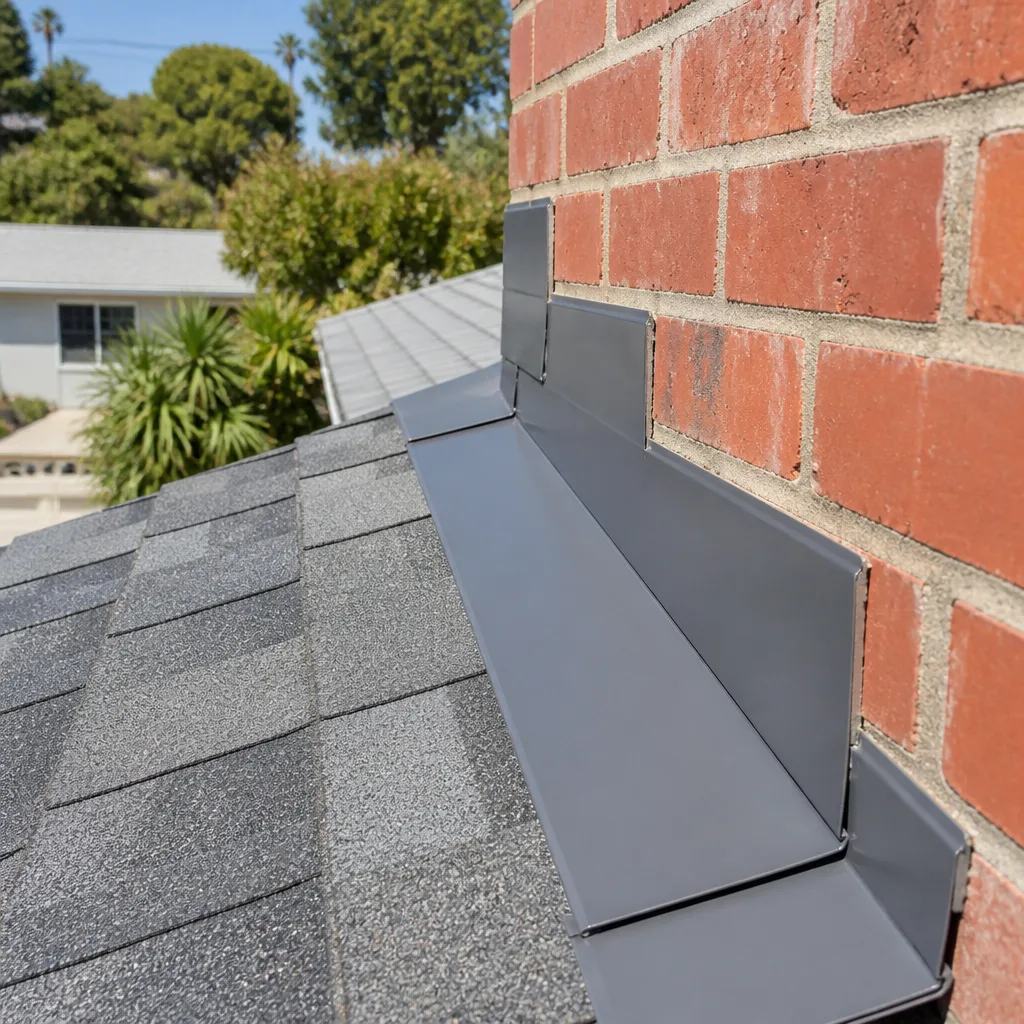
- Inspect all flashing edges. Look at where the roof meets walls, chimneys, skylights, and vents. Any sealant that’s cracked, pulled back, or chalky needs attention before summer heat finishes the job.
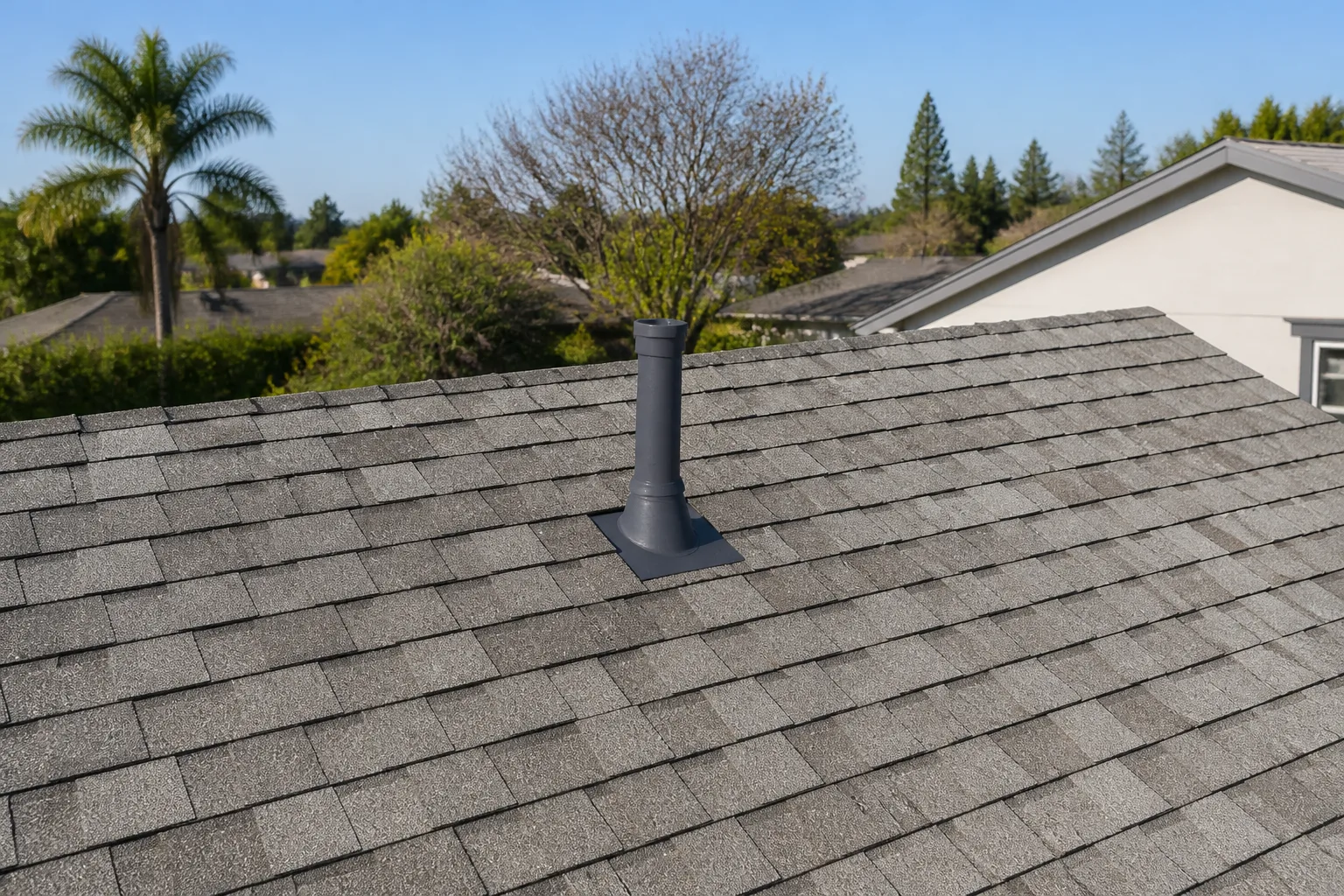
- Check pipe boots. The rubber or neoprene collar around plumbing vents is one of the most common leak points on any roof, and it degrades faster in high heat. If the collar is cracked or the boot has pulled up from the pipe, that’s an April item, not an October one.
- Walk the valleys. Valley flashing carries the most water of any part of the roof. Look for lifting edges, debris trapped under the flashing, and any sign that the metal has separated from the shingle course above it.
- Clear the gutters of winter debris. Everything the wet season washed down needs to come out now, so the gutters are clean and dry when summer granule loss begins.
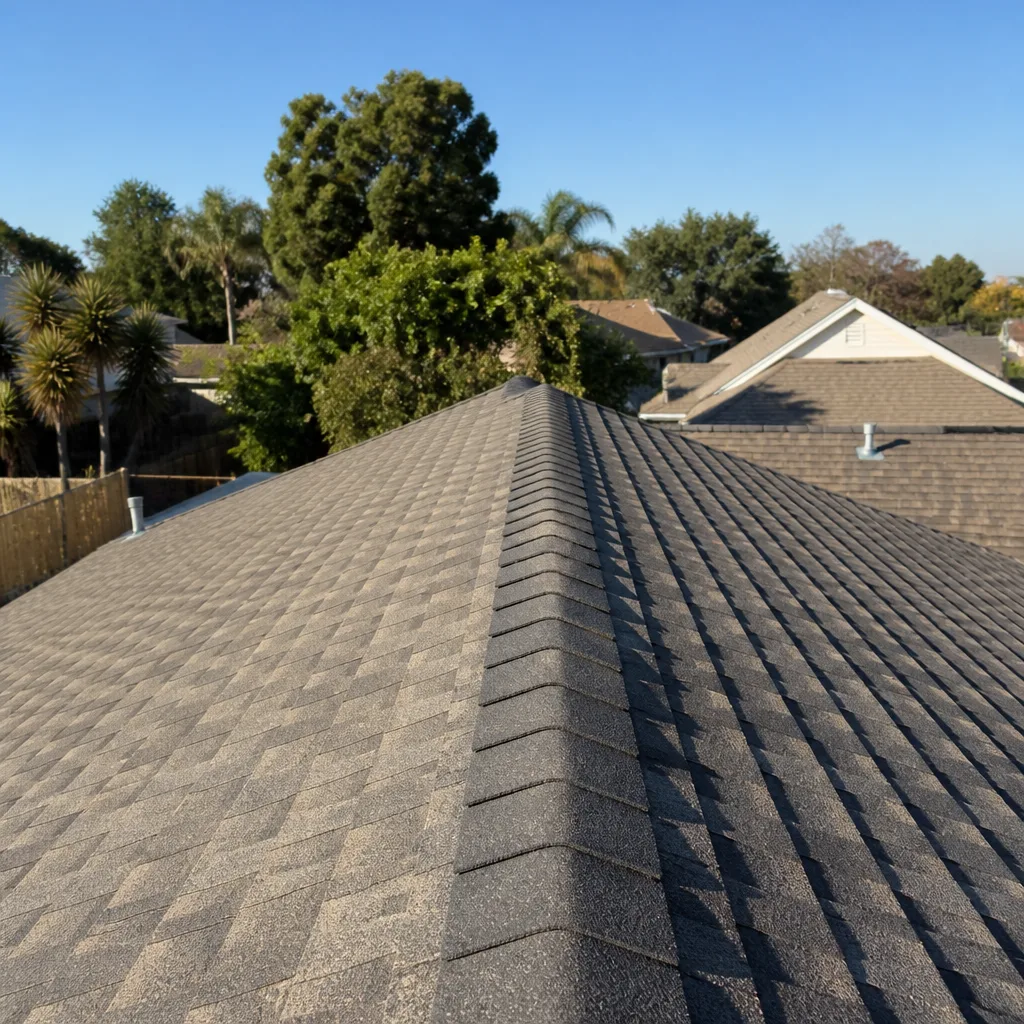
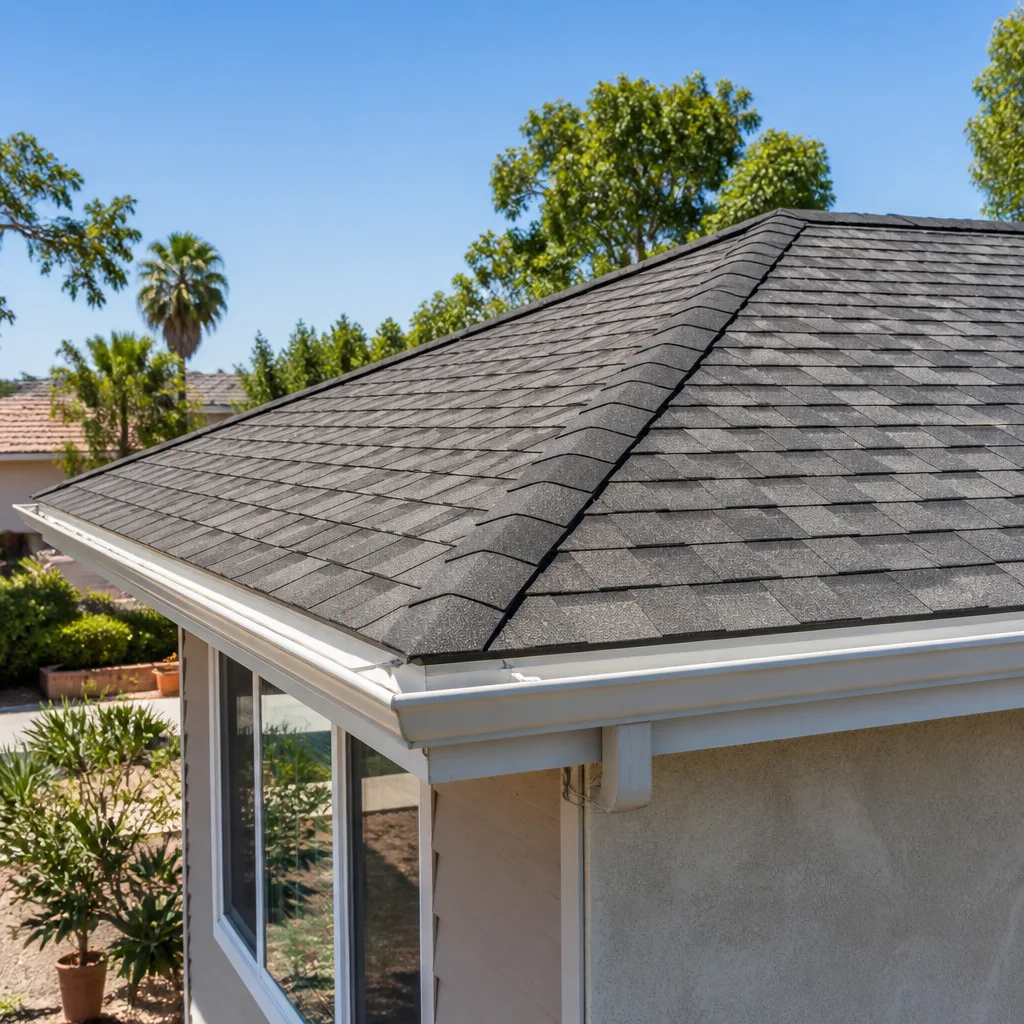
- Look at ridge and hip caps. Ridge shingles take the most direct sun on the roof and are usually the first to crack or lift. Re-sealing or replacing a few ridge caps in spring is a small job. Ignoring them through a summer is not.
- Inspect the attic underside. From inside, look for daylight, water staining, or damp insulation. This is your baseline before summer.
- Check the soil line and drainage around the foundation. Water that pools at the base of the house after a storm is a roof-drainage problem as often as a grading problem.
If you do one thing on this list, do the flashing inspection. In our experience, more Roseville leaks trace back to failed flashing sealant than to any other single cause, and the failure is almost always visible in April.
Summer Monitoring: Reading the Signs of Heat Stress
You won’t do heavy work on the roof in July and August. What you will do is watch. Summer monitoring is about noticing the specific signs that a roof is under thermal stress, so you can act in October rather than discovering the problem mid-storm.
What to look for from the ground, from a ladder at the gutter line, and from the attic:
- Granule deposits in gutters spike in July and August. Some granule loss is normal on asphalt shingles. A noticeable increase in the heat of summer usually means the shingle surface is degrading faster than it should. Heavy, steady granule accumulation is worth a professional look.
- Ridge cracking. Hairline cracks along ridge caps that weren’t there in spring are a clear thermal cycling sign. They widen over the season.
- Lifted flashing. If you can see a gap or shadow line where flashing sits against a wall or chimney, the sealant has given up. Note where it is.
- Curling or cupping shingles. Edges that lift or curl are past their flexibility. Once shingles curl, they’re candidates for replacement, not repair.
- Daytime attic heat and interior temperature swings. If the attic is noticeably hotter than in prior summers, that can point to ventilation problems compounding roof heat.
- Interior water stains after a rare summer shower. Even a small rain event in summer can reveal a leak that a dry spring hid.
Keep a simple log. Photograph what you see. When October arrives and you’re deciding what needs sealing versus replacing, that summer record is the difference between a clear decision and a guess.
The surface-temperature reality
During peak summer, roof surfaces in Roseville can stay far hotter than the air for hours after the sun passes. That’s why we advise against summertime work on the roof at all. It’s also why spring sealing matters so much. Sealant applied in April is fully cured and bonded before the worst heat arrives. Sealant applied in June is fighting an uphill battle from day one.
The Pre-Rainy-Season Checklist: October
October is the second critical pass. The wet season in Roseville starts around November, and the first heavy rain after a dry summer is famously when problems surface. The reason is simple: six months of heat and no water leaves the roof, the gutters, and the ground in a state where a sudden rain has nowhere to go gently. Everything drains at once. Every weakness is tested at once.
Work through this list in late September or October:
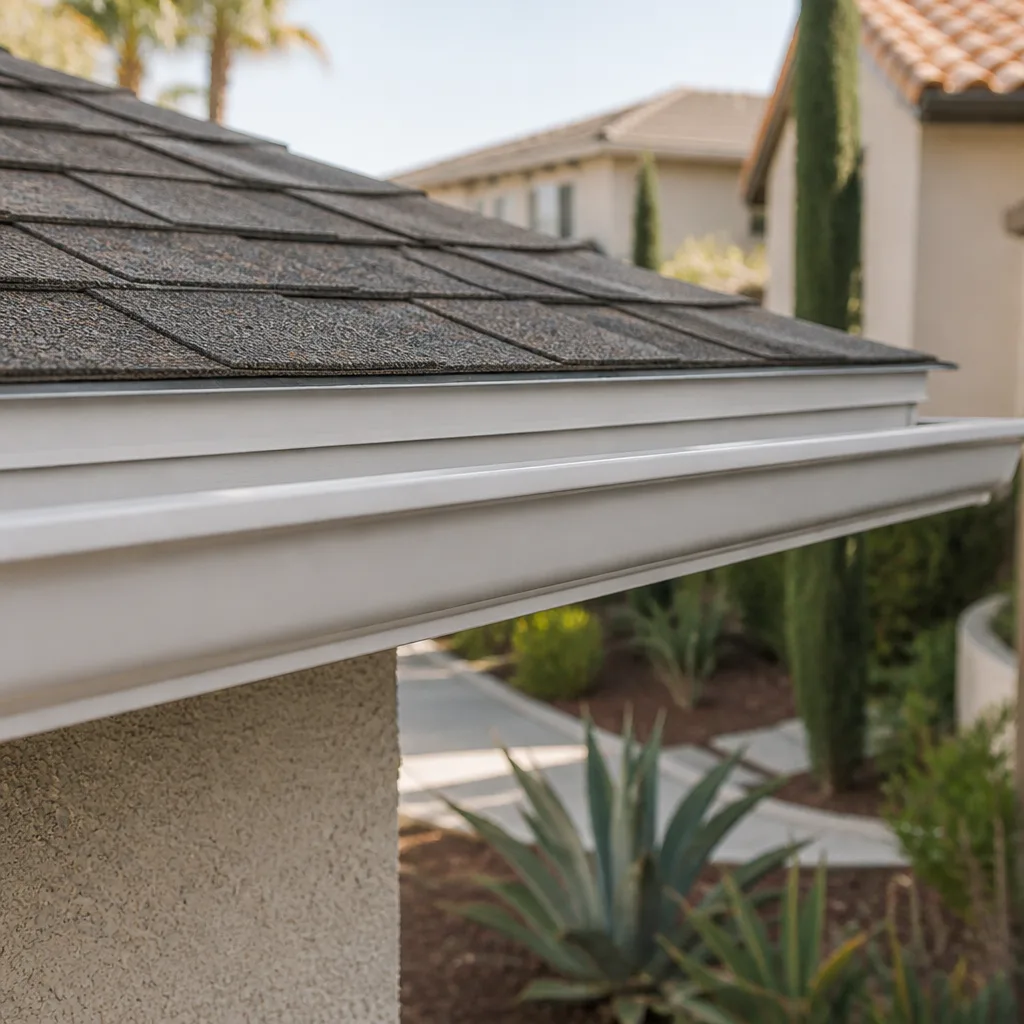
- Gutter brackets and hangers. From the ground, look at how the gutters hang. Brackets that have loosened over a dry summer will drop under the weight of the first full gutter of rain. Check the fasteners and note any sag.
- Valley flashing again. Re-examine the same valleys you checked in spring. Summer heat can shift them. Debris that accumulated over the dry season needs to clear.
- Pipe boot seals. The thing you were watching all summer is the thing to reseal or replace now, before it’s tested.
- Wall and chimney flashing. Any area you noted in summer as lifted or cracked gets addressed in October. This is the last good window to reseal.
- Gutter downspout connections. Look at where downspouts meet the gutters, where they attach to the wall, and where they discharge. Any splash block that’s moved or missing means water dumping at the foundation instead of away from it.
- Roof-to-gutter transition. Check that the drip edge is intact and that water leaving the roof edge drops into the gutter, not behind it.
- Ridge, hip, and flashing sealants. A final holistic check of every sealant joint.
- Attic check for the season. Clean, dry, and free of the summer’s dust and debris, and with fresh mental baseline for what winter does.
The gutters and the pipe boots. If we had to prioritize the whole October list, those two catch the most homeowners off guard in the first storm of the year.
When Winter Storms Arrive After a Long Dry Spell
There’s a specific sequence to a Roseville wet season that matters more than most homeowners realize. The ground is exceptionally dry when November arrives. That dry soil takes up a lot of the first rain before it begins to shed water. But after the first couple of storms, the soil saturates, and every subsequent storm drains with nowhere to go but across the surface and into drains.
That sequence tells you how to read a leak. A leak that appears during the first storm is usually pointing at a direct roof defect – a failed boot, a lifted flashing, a cracked sealant that was always going to leak. A leak or damp patch that only appears after several storms is more often related to saturation, drainage, or a slow accumulation of water finding its way along a path that wasn’t there in a dry year. Knowing which one you’re looking at changes the fix.
Assessing potential leak points vs. structural concerns
If water is showing up inside, the useful questions are these:
- Did it appear in the first storm of the season, or after the third or fourth?
- Is it a single spot, or a wide area along a wall or ceiling line?
- Is the interior damage limited to a stain, or is there sagging, spongy drywall, or visible movement?
- Does it track with the direction of the wind during a storm, or does it appear regardless?
A first-storm leak that tracks to a direct roof defect is a roof repair. A later-season leak or dampness in a broader area may point to drainage or saturation and needs a different assessment. And any sign of structural movement – a sagging ceiling, spongy framing, or a door or window that suddenly sticks near the leak – is a reason to stop and call in a professional, not to keep investigating from a ladder.
Never put yourself on a wet roof in winter to investigate. Wet shingles and metal are slippery, and the risk isn’t worth it. Address what you can from the attic and the ground, and let a trained professional handle the roof.
Spring Post-Season Assessment: March and April
March and April are when you learn what the wet season actually did. The rain is tapering off, the roof dries out, and any hidden damage that was masked by ongoing storms becomes visible. This is the assessment that tells you whether the year left you with a maintenance list or a bigger problem to plan for.
What to look for in spring:
- Water staining in the attic. Fresh staining along rafters, roof decking, or insulation, that wasn’t there in the fall, is the clearest evidence of a leak during the wet season.
- Discolored or damp insulation. Damp insulation is a strong indication of slow, ongoing moisture.
- Ceiling and wall stains. New stains, or existing ones that have grown, are a sign to have a professional look.
- Debris accumulation in gutters after the final storm. Clear everything before summer heat comes. Gutters that sat full of wet debris through the winter can show damage at their fasteners.
- Gutter damage. Look for pulled fasteners, sagging, or any separation at seams. Winter weight and wind are hard on gutters.
- Flashing sealant condition. Re-check the flashing you sealed in October. If anything has pulled back through the winter, it needs a fresh seal before summer.
- Shingle condition. Look for visible cracking or lifting that appeared over the wet season. This is the moment to schedule the summer-ready repairs you want done in May rather than ignored until fall.
Spring assessment is also when you should be honest with yourself about the roof’s age. If the wet season revealed leaks in multiple locations, and the shingles are curling or heavily granule-depleted, the conversation may shift from maintenance toward shingle roofing and what a professional replacement looks like. That’s a decision better made calmly in spring than urgently in the middle of December.
How Material Choice Changes the Maintenance Calendar
Not every roof needs the same amount of seasonal attention. The material you have, or the material you choose on a replacement, shifts what your maintenance year looks like. Having installed all three major residential roofing systems – shingle, tile, and metal – we see the difference clearly.
Shingle roofs
Asphalt shingles, including architectural and dimensional products, are the most common residential roof in this area, and they respond directly to heat and sun. Granule loss is the main thing to monitor, and ridge caps are the primary wear point. Spring re-sealing and fall flashing checks matter most here. Product quality makes a real difference in how quickly the surface ages, which is why we work with manufacturers like GAF and CertainTeed whose shingle lines are tested for heat and UV performance, not just appearance.
Tile roofs
Tile handles heat very differently. The tile surface itself rarely degrades from UV, but the underlayment and the flashings underneath do all the aging. That changes the seasonal calendar: the tile panels need less attention, and the underlayment and the flashing details carry almost all of the maintenance. Boral tile products are common in this region for that reason. A tile roof’s spring checklist is really a flashings-and-underlayment checklist.
Metal roofs
Metal roofs manage heat well, but they expand and contract more than any other material. Fasteners, sealant joints at penetrations, and panel seams carry the maintenance load. Washing the roof occasionally and inspecting the fasteners and flashing details is the core seasonal work. Metal is also the material where slipping risk on a wet winter inspection is highest, so if you’re considering a metal roof, let a professional handle anything that requires walking the roof.
Matching material to your home
A roof replacement is one of the largest investments your home will see, and the material that’s right for your house depends on the pitch, the structure, the look you want, and how you want the maintenance year to run. We work with seven of the roofing industry’s most recognized manufacturers – GAF, CertainTeed, Owens Corning, IKO, Atlas, Tamko, and Boral – so the recommendation comes from what fits your situation rather than what a single brand happens to stock. Roofing Roseville Pros handles both new roof installation and full replacement, so whether you’re building or replacing, the material decision gets made with the same care.
Common Mistakes to Avoid
These are the recurring missteps we see on Roseville roofs. Most of them are the result of applying generic advice to a specific climate.
- Doing repairs in the wrong month. Sealing flashing in June or July, when the surface is too hot for sealant to cure properly, means you’ll be resealing it within a season. April and October are the right windows.
- Ignoring the gutters in summer. Many homeowners clean gutters only in spring and assume that’s enough. The heavier granule load arrives in July and August, and a full gutter going into fall is a problem waiting for the first storm.
- Treating the first winter rain as normal. The first heavy storm after a long dry summer is the single most likely time for a hidden issue to surface. If you had a leak, that storm is why.
- Skipping the spring assessment. A quiet winter is not proof the roof came through clean. Walk the attic in March or April. That’s when stains are visible and detectable.
- Assuming heat is harmless because it isn’t rain. In Roseville, the summer is harder on a roof than the winter. Treat UV and heat as the primary aging forces, and schedule the sealing work accordingly.
- Letting one small flashing repair snowball. A failed sealant joint in April, gone unnoticed, becomes a wet deck and interior staining by December. Each small seasonal item is cheap when it’s small.
- Assuming every roof needs the same maintenance. A tile roof and a shingle roof have different seasonal priorities. Match the checklist to the material.
When to Call a Professional
Most seasonal maintenance you can handle yourself: clearing gutters, inspecting from the ground, checking the attic, and keeping a record of what you see. But some situations need a trained roofer. Call us if you find water staining or damp insulation in the attic, if flashing is visibly lifted and sealing it feels beyond a straightforward repair, if shingles are curling or heavily granule-depleted, or if you see signs of structural movement such as a sagging ceiling or a window that suddenly sticks near a leak. Also call if you’re simply not sure what you’re looking at. A short inspection can save you from spending a season chasing a problem that has a known cause and a specific fix.
Roofing Roseville Pros offers free estimates in Roseville. Call (279) 529-0857 to schedule an inspection or talk through what you’ve noticed. We answer 24/7. Fast dispatch from 7am to 7pm, Sunday through Friday. Our technicians have up to 10 years of experience, and our whole focus is roofing – not plumbing, not HVAC, not general contracting.
Frequently Asked Questions
The April and May inspection and sealing pass is the highest-value thing you can do, because it happens before summer heat accelerates every weakness in flashing and caulk. Getting sealant set before the heat arrives prevents far more leaks than any other pass in the year. If April has passed and you haven’t done it, call (279) 529-0857 for an inspection – estimates are free.
Because six months of dry heat leave the roof, gutters, and ground in a state where the first heavy storm tests every weakness at once. A dry-summer roof sheds a sudden downpour with nowhere for debris to go and no prior flow to reveal a failed joint. Most first-storm leaks trace back to a flashing, a pipe boot, or a gutter that got overlooked in October. Call (279) 529-0857 for an exact quote on the repair – estimates are free.
A basic seasonal inspection that includes flashing, boots, valleys, and gutters typically runs an estimated $200 to $450 per visit, and repairs to failed sealants, boots, or ridge caps usually fall in an estimated $150 to $600 range depending on how much area needs attention. The written estimate sets the final price, and estimates are free. Call (279) 529-0857 to get yours.
Yes for gutters, ground-level inspection, and the attic check. No for anything that puts you on the roof, in the heat, on wet or steep surfaces, or near the flashings and boots that need sealant work. Roofs are slippery when dry and dangerous when wet, and a fall is a serious injury. Roofing work warrants a trained professional. Call (279) 529-0857 for an inspection and an honest assessment of whether the roof needs maintenance, repair, or replacement.
Do an attic walk in March or April and look for fresh water staining, damp insulation, or daylight showing through the roof deck. Any of those is a sign the wet season found a weakness. If you find any of it, call (279) 529-0857 for a professional inspection – estimates are free, and it’s better to know before summer heat goes to work on the same spot.
Yes. Shingle roofs need attention to granules and ridge caps; tile roofs need nearly all maintenance focused on the underlayment and flashing; metal roofs need fastener and seam attention plus careful wet-weather handling. Matching the seasonal checklist to the material makes a real difference. Call (279) 529-0857 to talk through your specific roof.
The Bottom Line
Roseville’s roof year has two moments that matter: a spring pass before summer heat accelerates every weakness, and a fall pass before the first heavy rain tests them all. The rest of the year is monitoring – watching for granule loss in summer, noting any staining after storms, and assessing what the wet season did in March. Match the checklist to your material, never work on the roof yourself in the heat or on wet surfaces, and treat the first storm after a dry spell as a real event. Get ahead of it in April and October and most years will pass with nothing more than a maintenance list. Reach out to Roofing Roseville Pros for a free estimate whenever you want a professional’s read on what you’re seeing. Call (279) 529-0857 to schedule. We answer 24/7. Fast dispatch from 7am to 7pm, Sunday through Friday.
Written by the team at Roofing Roseville Pros.
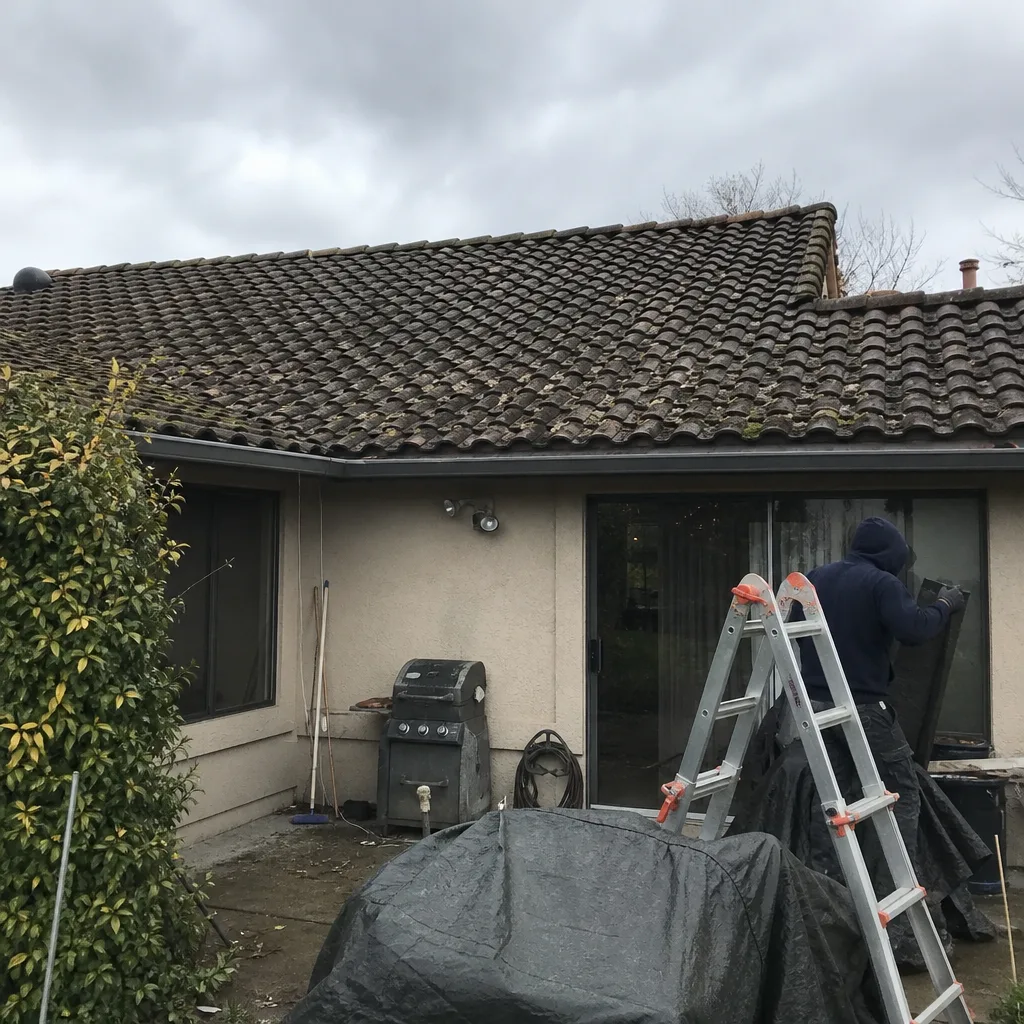
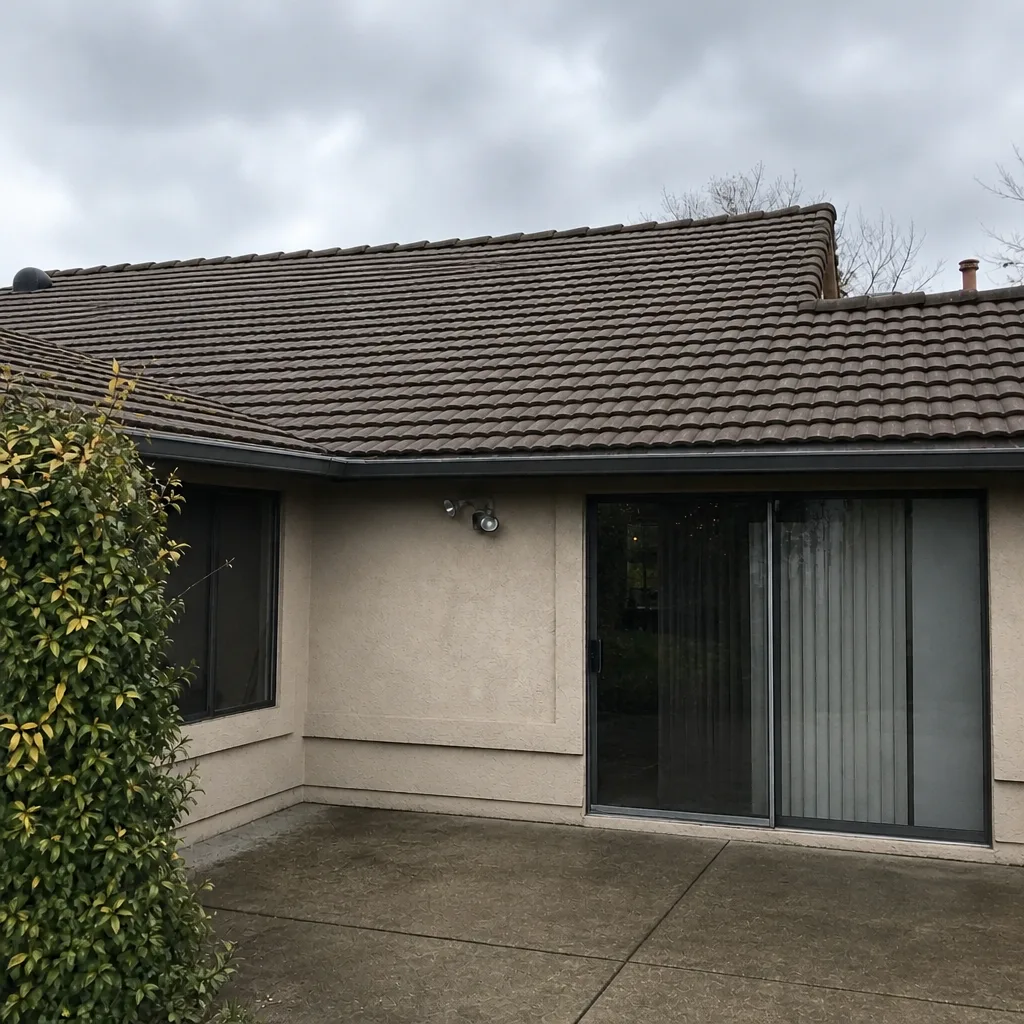
See the difference
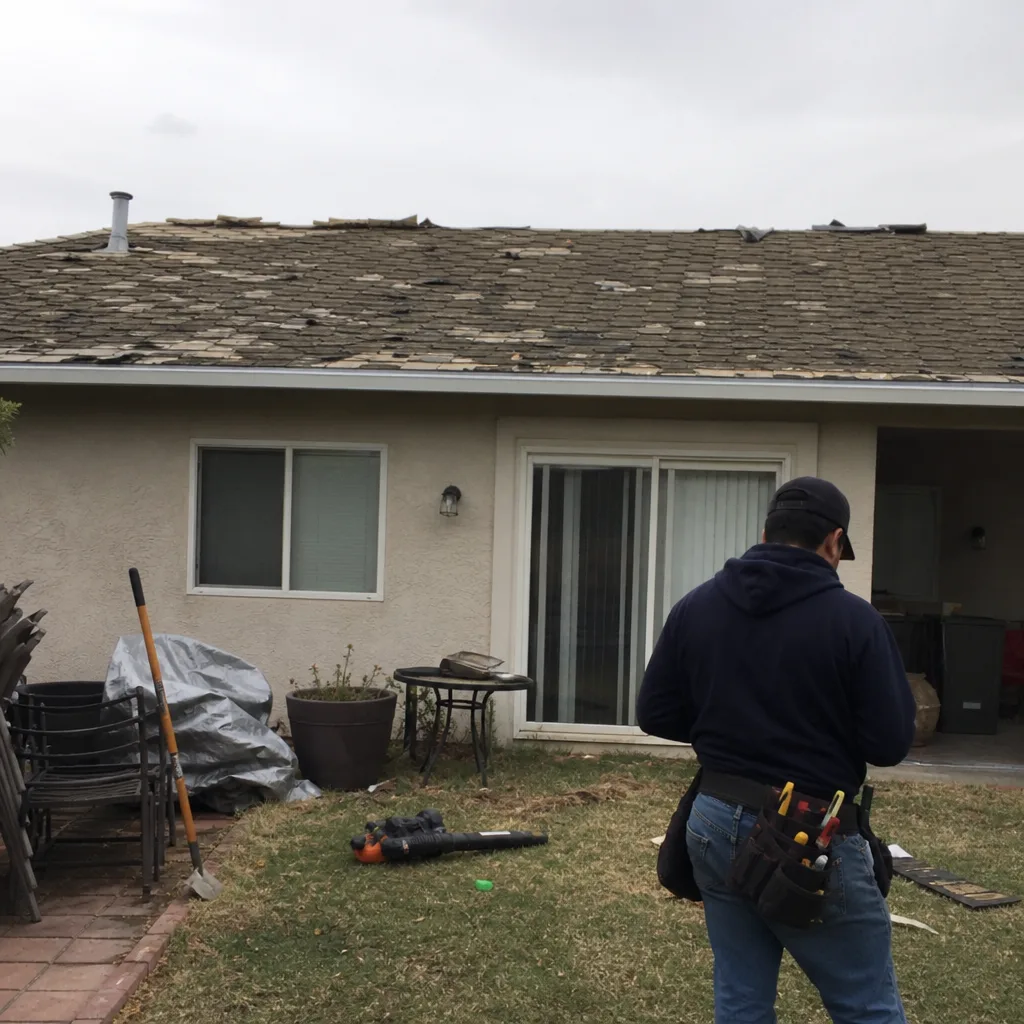 Before
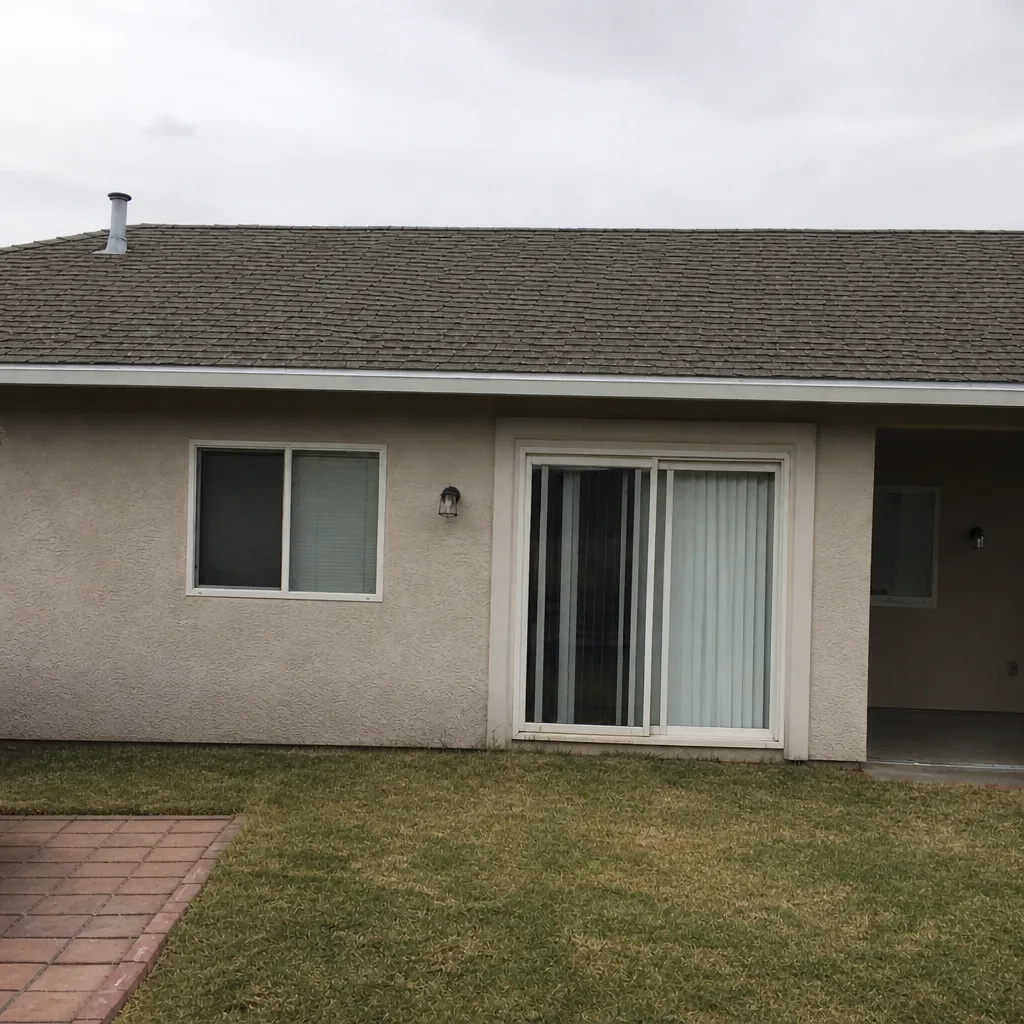 After
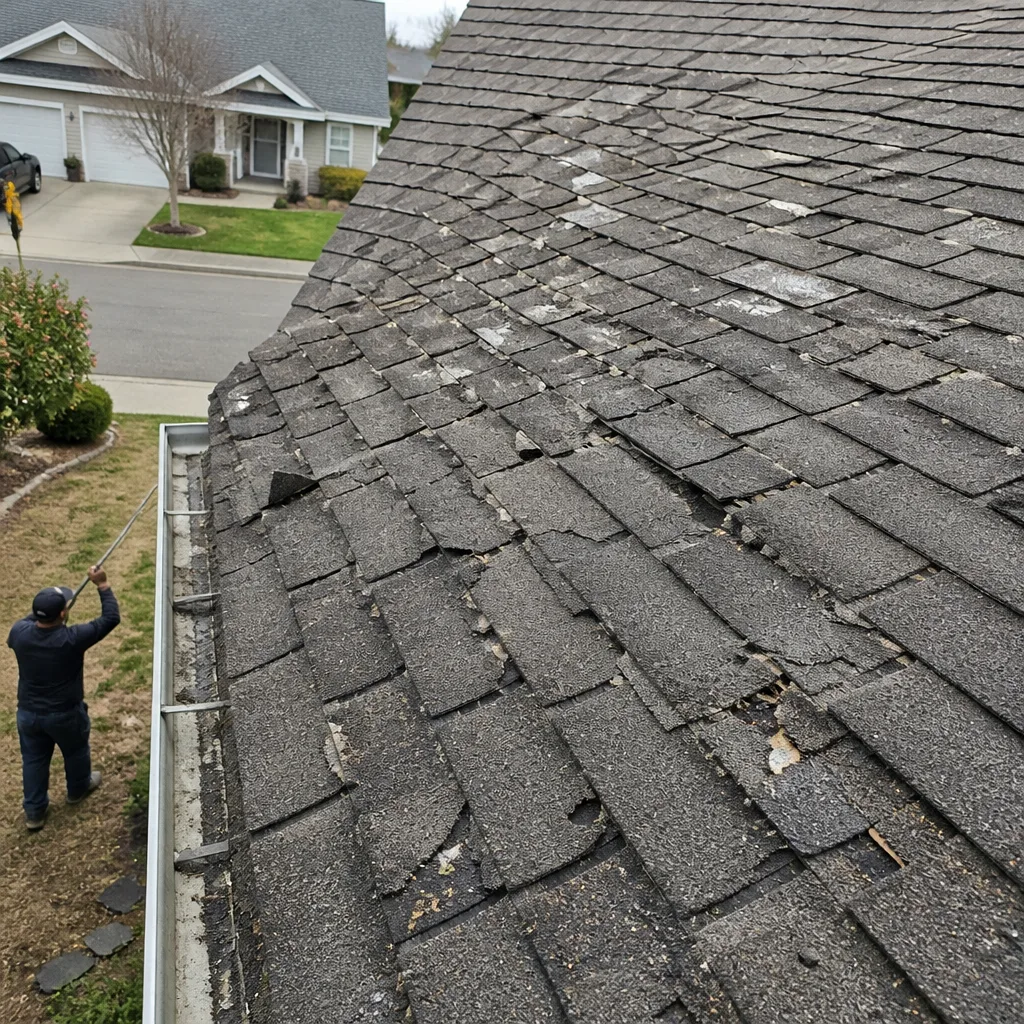 Before
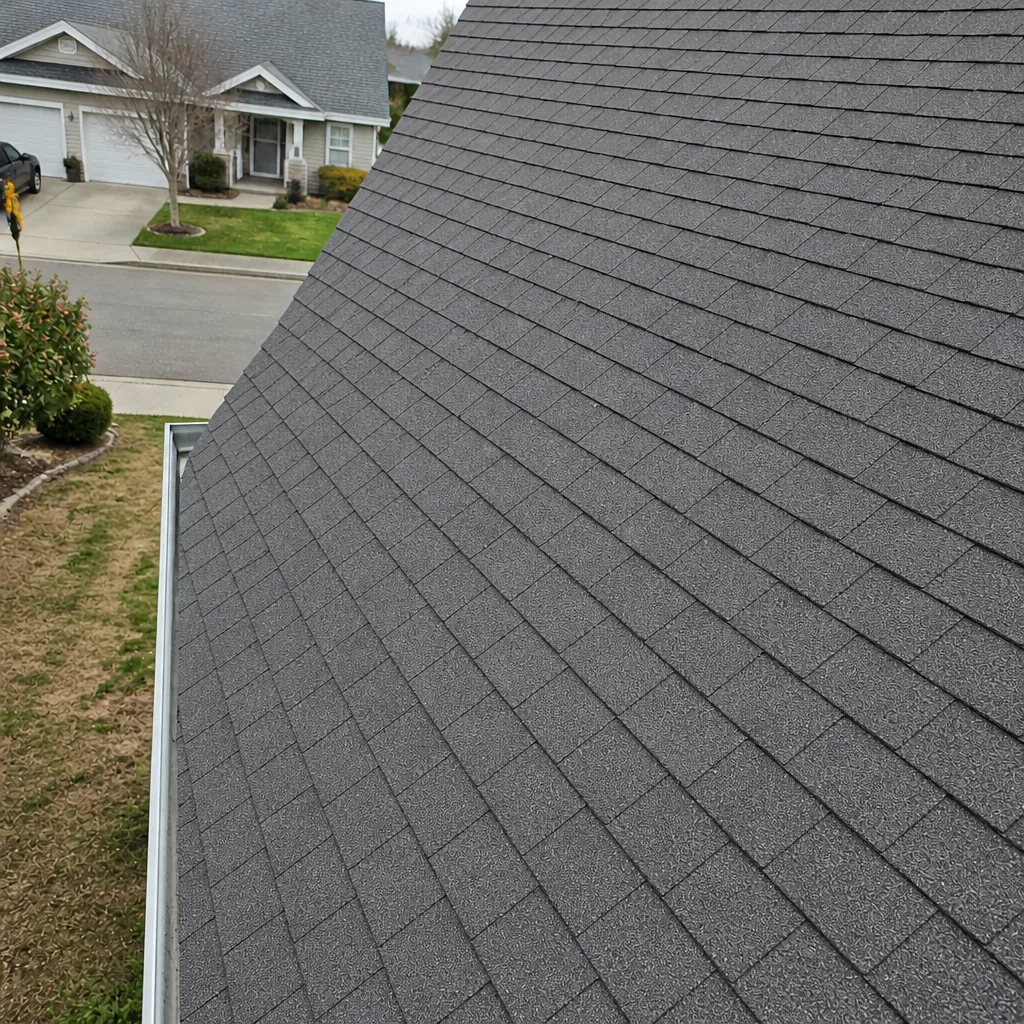 After
 Before
 After