
Roof Replacement in Roseville, CA: How It Works, Step by Step
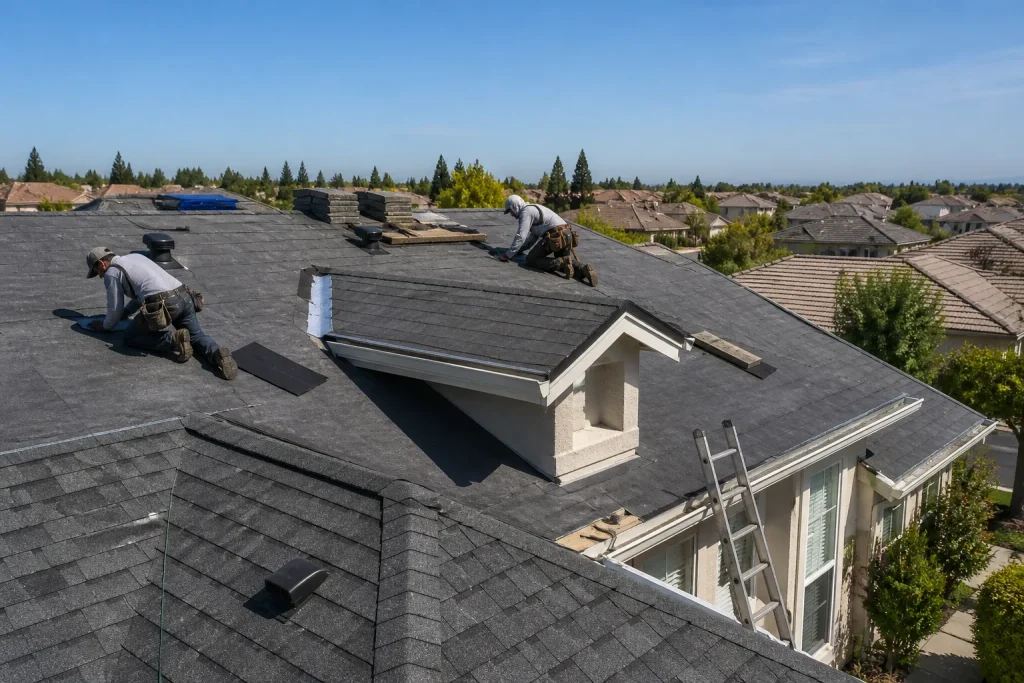
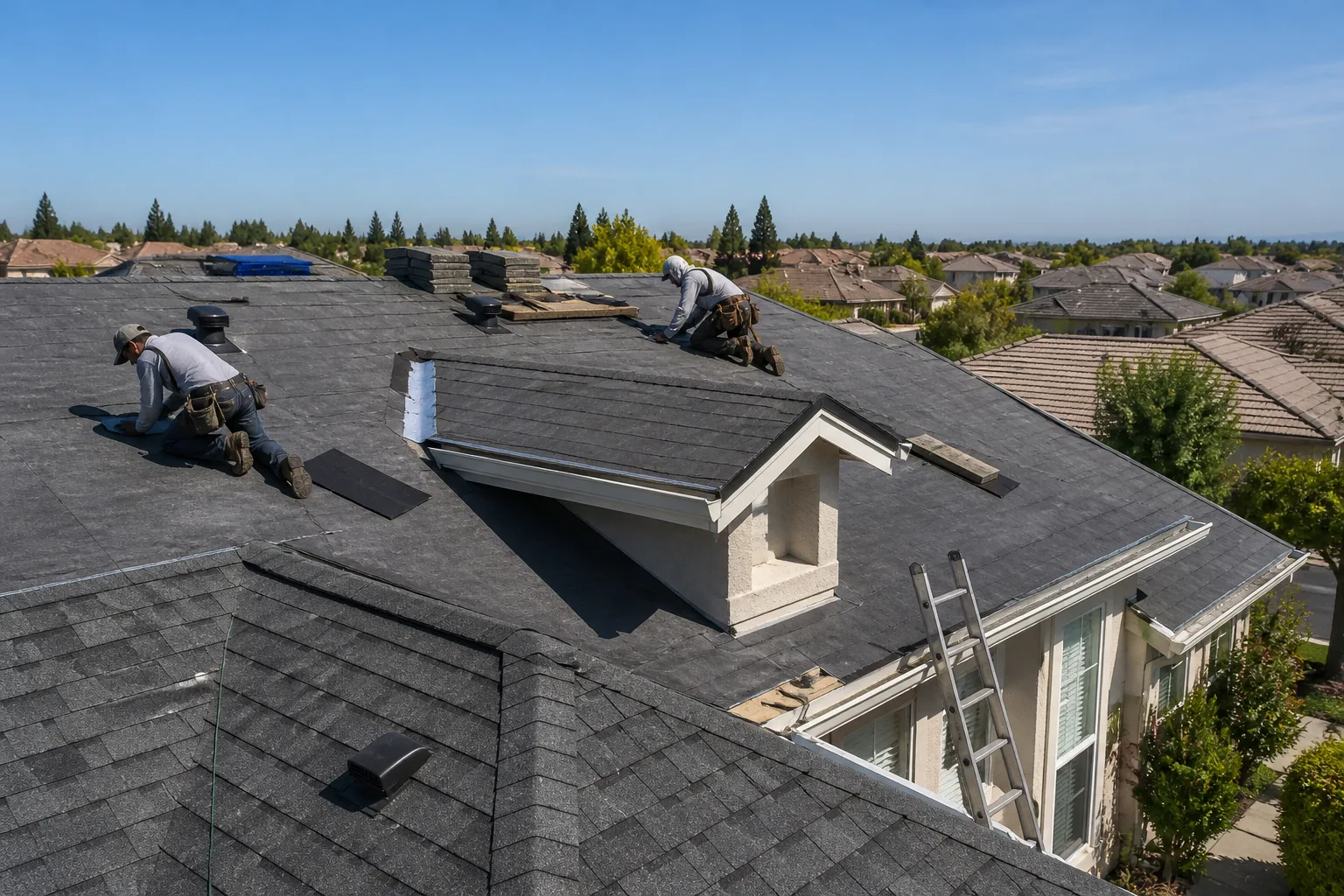
The most consequential part of your Roseville roof replacement happens when the old material comes off. What your contractor finds, or ignores, on the decking in that window determines whether your new roof lasts 20 years or 12. Most homeowners spend their time picking shingle colors and never ask what happens in those first few hours of tear-off. This walkthrough covers the whole sequence, from permit to final payment, with the decision points that actually matter.
If you’d rather not sort through it alone, call (279) 529-0857 and we’ll walk your specific roof through it.
Key Takeaways
- The condition of your roof decking, not the finish material, is the biggest long-term performance factor.
- Underlayment is where hot-climate performance is decided, well before a shingle is nailed.
- Permits in Placer County aren’t paperwork theater. Unpermitted work can surface at resale.
- Flashing replacement versus flashing over an existing layer looks similar from the ground. You need to know how to tell.
- Final payment should follow the inspection walkthrough, not precede it.
What does the permit and inspection schedule look like in Roseville?
A Roseville roof replacement generally requires a permit from the city’s building department, and the inspection schedule is part of the project timeline from day one. Leaving that permit out doesn’t save money. It creates a paper trail problem that shows up when you sell, when an appraiser or buyer’s inspector asks for the permit history on the home.
The permit pull happens before tear-off starts, not after. Most jurisdictions want the permit on record before demolition begins, so a crew showing up with no permit in place is a warning sign. In Roseville, the sequence usually runs like this:
- Permit application and issuance, typically before any material is removed.
- Decking inspection after tear-off, while the roof is still open and visible. Some jurisdictions inspect at this stage, some don’t, but a well-run job documents it either way.
- Underlayment or dry-in inspection if the local authority requires one.
- Final inspection after the finished roof is complete.
Every jurisdiction handles the details differently, so ask the crew to confirm the inspection points that apply to your specific Roseville address. The best roof in the world is worth less if the file on your home says the work was never inspected. Permits pulled and inspections passed are non-negotiable for us, and if a contractor hesitates on that point, treat it as a red flag.
How does decking assessment work during tear-off?
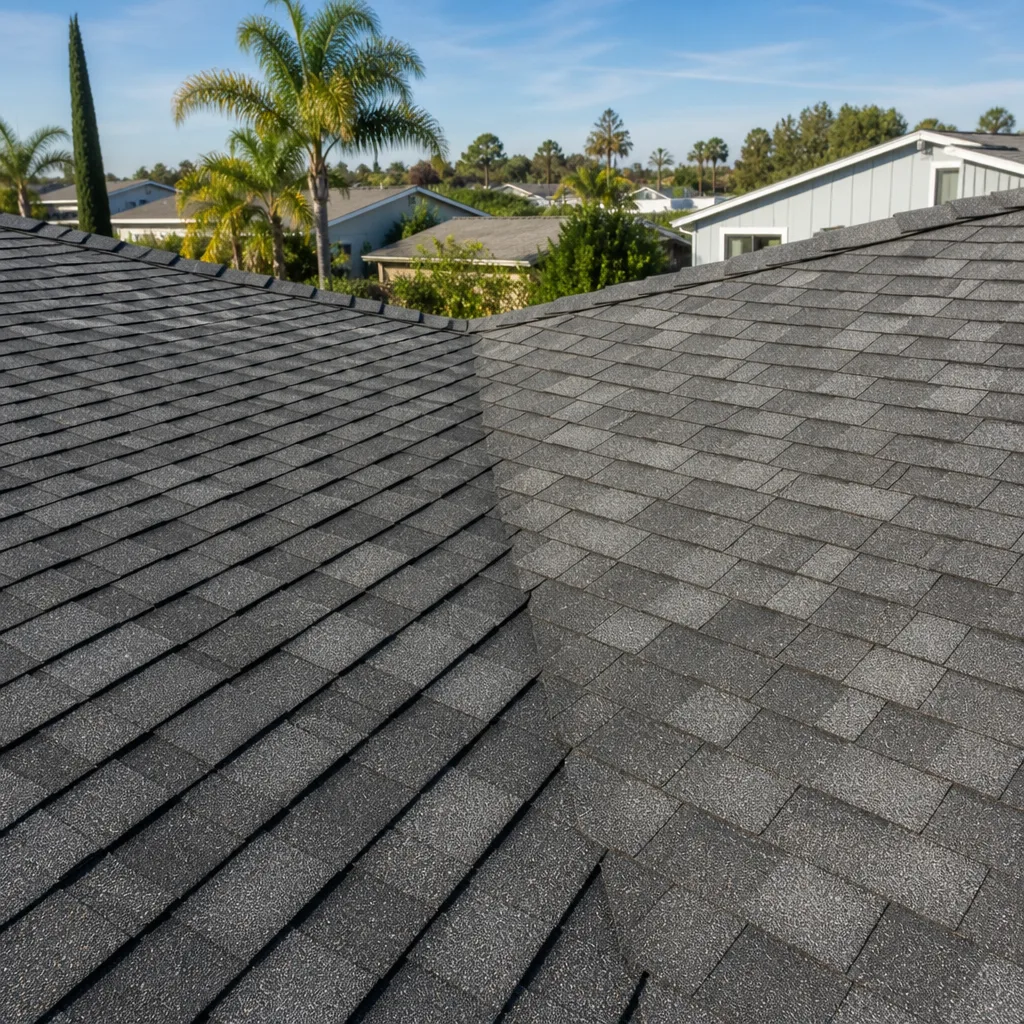
Decking assessment is the step where a contractor either does the job or cuts corners, and it’s where a large share of the total cost variance on a Roseville replacement comes from. Once the old shingles and underlayment are off, the crew can finally see the sheathing: the boards the whole roof is nailed through. Soft spots, delamination, water staining, nails that missed the framing – all of it becomes visible only at this stage.
Two materials show up here most often. Plywood is older, more dimensionally stable, and holds up well to moisture once it’s dried out. OSB is a newer engineered panel, cheaper per sheet, and generally fine when it’s sound. Replacement cost in 2026 depends on the panel type, thickness, and how much of the roof is compromised. A typical range runs higher for plywood than OSB, and a partial deck replacement on a small section of a Roseville roof usually costs far less than a full re-deck. Your contractor should walk you through the affected area with photos before quoting the addition.
Two things to demand here: a written addendum with panel count and material type, and a fixed per-sheet price quoted up front. Vague “we’ll see what we find” pricing is how a $10,000 job becomes a $14,000 job. If your contractor hasn’t given you the per-sheet number, ask for it before the old roof comes off.
If the decking is sound, this stage takes hours, not days. If it isn’t, the extra time is the whole ballgame. A roof reshingled over soft decking can fail in a fraction of the time a properly prepped roof will last.
Why is underlayment the step that decides hot-climate performance?
Underlayment is the layer between your roof deck and the finish material, and in Roseville’s hot, dry summers it’s doing more work than most homeowners realize. It’s your secondary barrier against wind-driven rain, a thermal buffer, and a backstop for the inevitable small leak that finds its way past a shingle. A cheap felt underlayment under premium shingles is a performance downgrade you’ll never see but will eventually pay for.
Synthetic underlayments outperform old asphalt-saturated felt in most hot-climate applications. They resist tearing, don’t wrinkle or dry out the way felt can, and they hold up better under the thermal cycling that comes with Roseville summers. Some product lines are rated for high-heat exposure, and the right choice depends on your roof pitch and the finished material.
What to verify before installation starts:
- The underlayment product name and spec, written into the proposal.
- That it’s a full-deck application, not spot-covered over existing layers.
- That laps are overlapped in the correct direction for your roof’s slope.
- That ice-and-water membrane is used at valleys and penetrations, even though our winters are mild. Any valley or wall junction is where water pools first.
This is the layer your contractor can cheap out on without you noticing for years. Ask what’s going down before the first shingle goes on. If you’re still sorting out which finish material you want to install over the underlayment, our shingle roofing page covers the most common choice for Roseville homes.
What does proper flashing replacement involve?
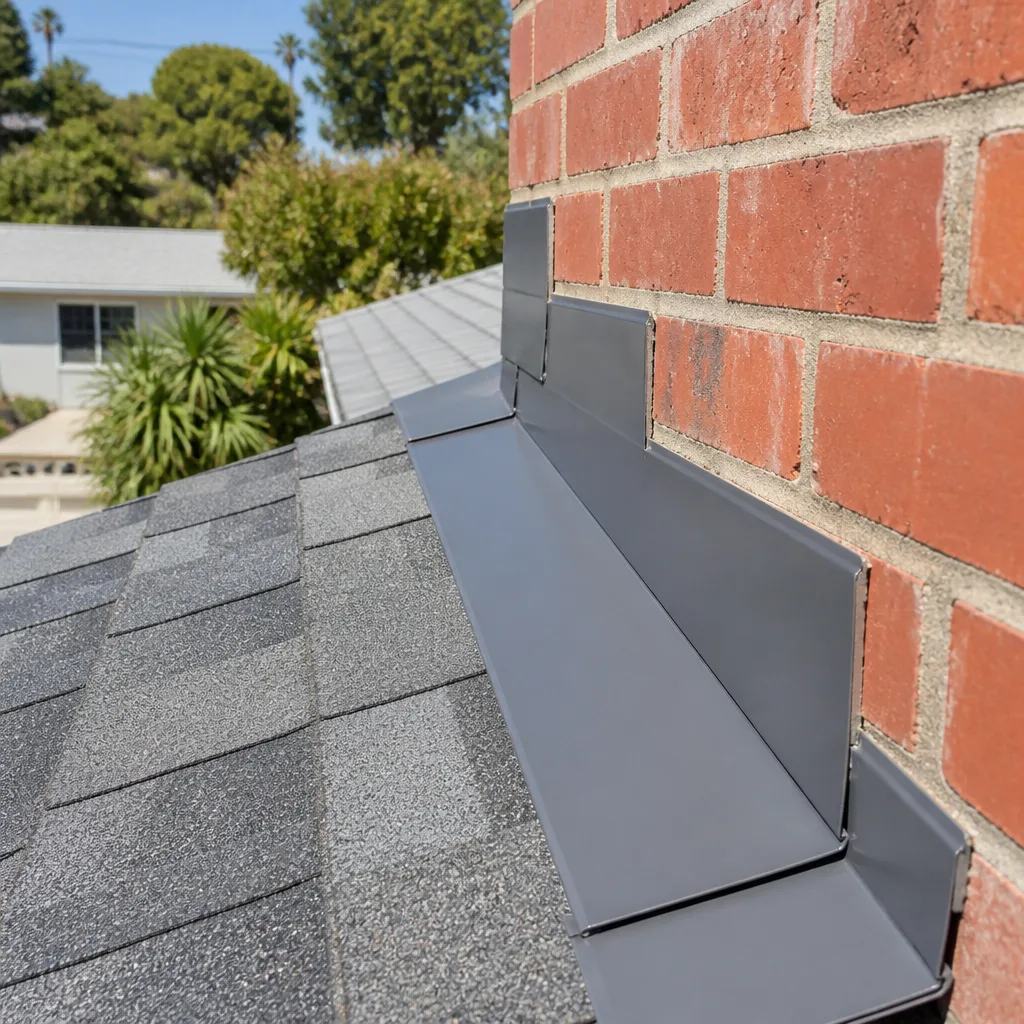
Proper flashing replacement means removing the old metal, checking the substrate behind it, and installing new flashing with correct layering and sealant – not sliding a new piece of metal over the old. “Flashing over” is the shortcut, and it’s the single most common reason leaks happen on a brand-new roof. The old metal traps moisture against the deck, the new metal hides the problem, and the first hard rain tells the story.
On a Roseville roof replacement, flashing gets replaced at every junction where the roof meets something else:
- Chimney counterflashing and step flashing
- Wall-to-roof transitions
- Valleys
- Vents, skylights, and pipe boots
- Drip edge along the eaves
How to tell the difference on your own job, from the ground and from the final photos: look at the edges. Flashing over an old layer usually shows a doubled metal edge, a wider-than-normal profile, or fresh sealant sitting over old caulk. Proper replacement means the old flashing is gone, and the new piece is tucked into the masonry or siding as it should be. Ask to see photos of every flashing detail before the finish material covers it. Once it’s covered, it’s hidden for the roof’s life.
If your roof’s main issue is the flashing and not the field shingles, an honest contractor will say so. Sometimes the fix is targeted, not a full replacement. Our roof replacement page goes into how we scope these calls.
What should you verify at the final inspection walkthrough?
The final inspection walkthrough is your last chance to catch issues before you release the final payment, and it’s the step where most homeowners hand over a check without looking. Walk the roof with your contractor, look at the photographic record of every stage, and confirm each item on this list before the balance is paid.
- Inspection card signed off. Confirm the city or county inspection has passed and the paperwork is in your hands.
- Material meets the proposal. Match the actual installed product against the brand and line you agreed on – GAF, Atlas, Tamko, or whichever brand was specified.
- Flashing photos. Review the pre-cover photos of every junction, valley, and penetration.
- Decking record. Confirm the panel count and material match the final invoice.
- Cleanup. Debris cleared from gutters, yard, and driveway, and no nails left in the grass. A magnet sweep should be standard.
- Warranty documents. Manufacturer documentation is in hand, along with any workmanship warranty from the installer.
When the roof is done, ask what warranty coverage transfers if you sell. Product lines from GAF, CertainTeed, and Owens Corning often carry manufacturer warranties that transfer to the next owner, which is a real selling point in the Roseville market. It’s worth knowing which warranty category your specific product falls into.
When to call a pro versus keep reading
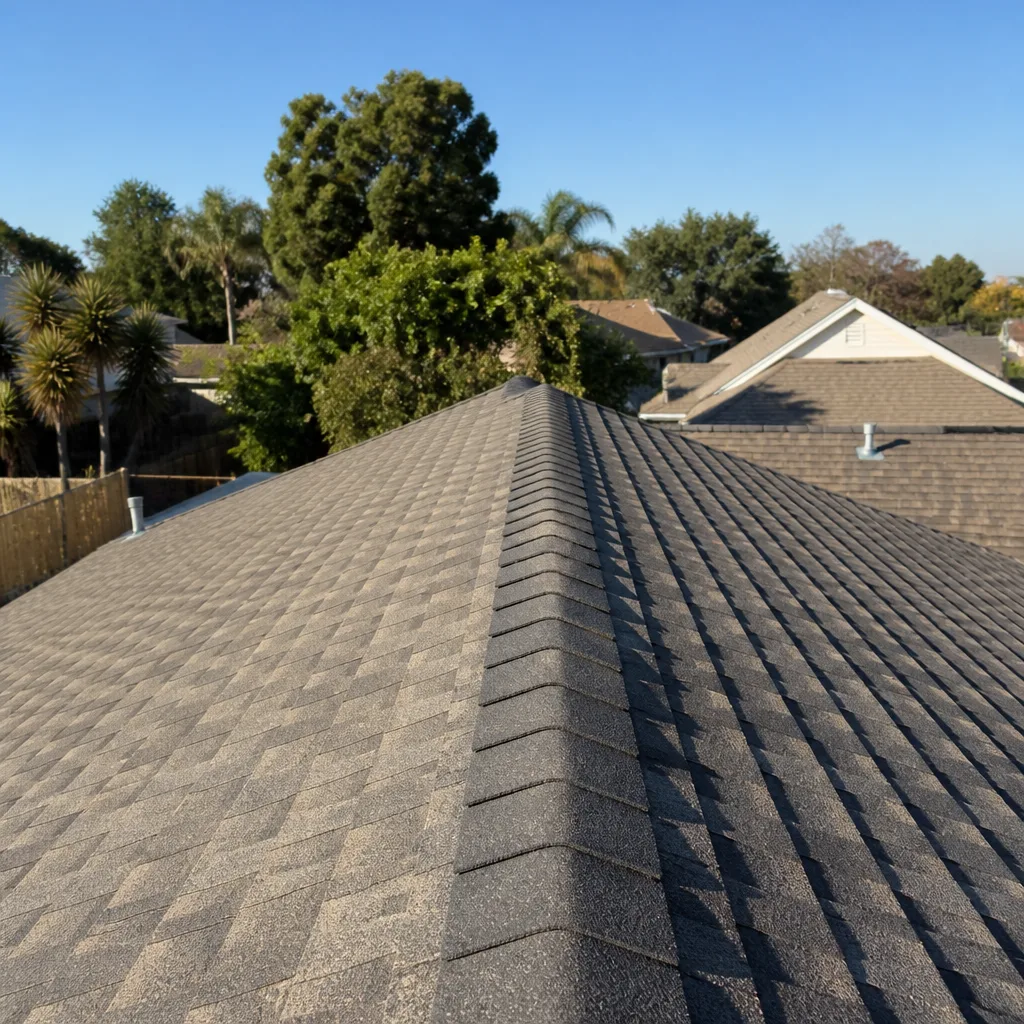
If you’re spotting water stains on the ceiling, soft spots on the deck, or shingles curling at the edges, that’s a “call a pro today” situation, not a research project. A trained eye catches in ten minutes what a homeowner misses for a season. Call (279) 529-0857 and we’ll assess it. We answer 24/7. Fast dispatch from 7am to 7pm.
If you’re in the early planning stage, choosing materials, comparing proposals, or specifying a new roof installation for a home you’re building in Roseville, keep reading and keep asking. The better questions you bring to the estimate, the better the project. Our technicians have up to 10 years of experience across shingle, tile, and metal systems, and we’re not tied to a single manufacturer. Seven brands, one specialist team, and we recommend what fits your roof and budget rather than what’s sitting in a warehouse.
Related services in Roseville: Roofing Roseville Pros, plus shingle roofing and new roof installation for the full material comparison.
The Bottom Line
Your Roseville roof replacement is won or lost in the first few hours. The permit should be pulled before a shingle comes off. Decking should be photographed, priced per sheet, and documented. Underlayment should be specified in writing, not chosen on the spot. Flashing should be replaced, not layered over. And the final payment should follow the walkthrough, not the other way around. Homeowners who know these five things ask better questions and get better roofs.
If you’re in Roseville and need help, Roofing Roseville Pros offers free estimates – call (279) 529-0857. We answer 24/7. Fast dispatch from 7am to 7pm, Sunday through Friday.
Frequently Asked Questions
A typical Roseville roof replacement takes one to three days once the permit is issued and materials are delivered, with most single-family homes finishing in two. Adding decking replacement or complex flashing detail can extend that. Timelines depend on roof size, pitch, and weather, and the written estimate is where the schedule gets set.
Most Roseville roof replacements require a permit from the city or county building authority, and skipping it can cause problems when you sell or refinance the home. Ask the jurisdiction that covers your address for the exact requirements. In our experience, a good contractor pulls it as a matter of course. Call (279) 529-0857 if you want to talk through the permit side of a project – estimates are free.
Plywood typically costs more per sheet than OSB at 2026 pricing, and full-deck replacement runs far higher than a partial repair on a small section. The best way to know is to have the affected area of your decking documented with photos after tear-off. The written estimate sets the final per-sheet price. Call (279) 529-0857 for an exact quote on your Roseville roof.
Yes. Replacing flashing at valleys, walls, and penetrations is standard on a proper replacement. Flashing over the old layer hides problems and is the most common reason a new roof leaks. If you’re not sure what your proposal covers, ask for the flashing scope in writing. Call (279) 529-0857 if you’d like a second opinion on a quote you’ve received.
Written by the team at Roofing Roseville Pros.
Need Roofing Help?
Call Roofing Roseville Pros - the local pro we connect you with is licensed and insured, here with fast help in Roseville.
(279) 529-0857