Last updated November 25, 2026
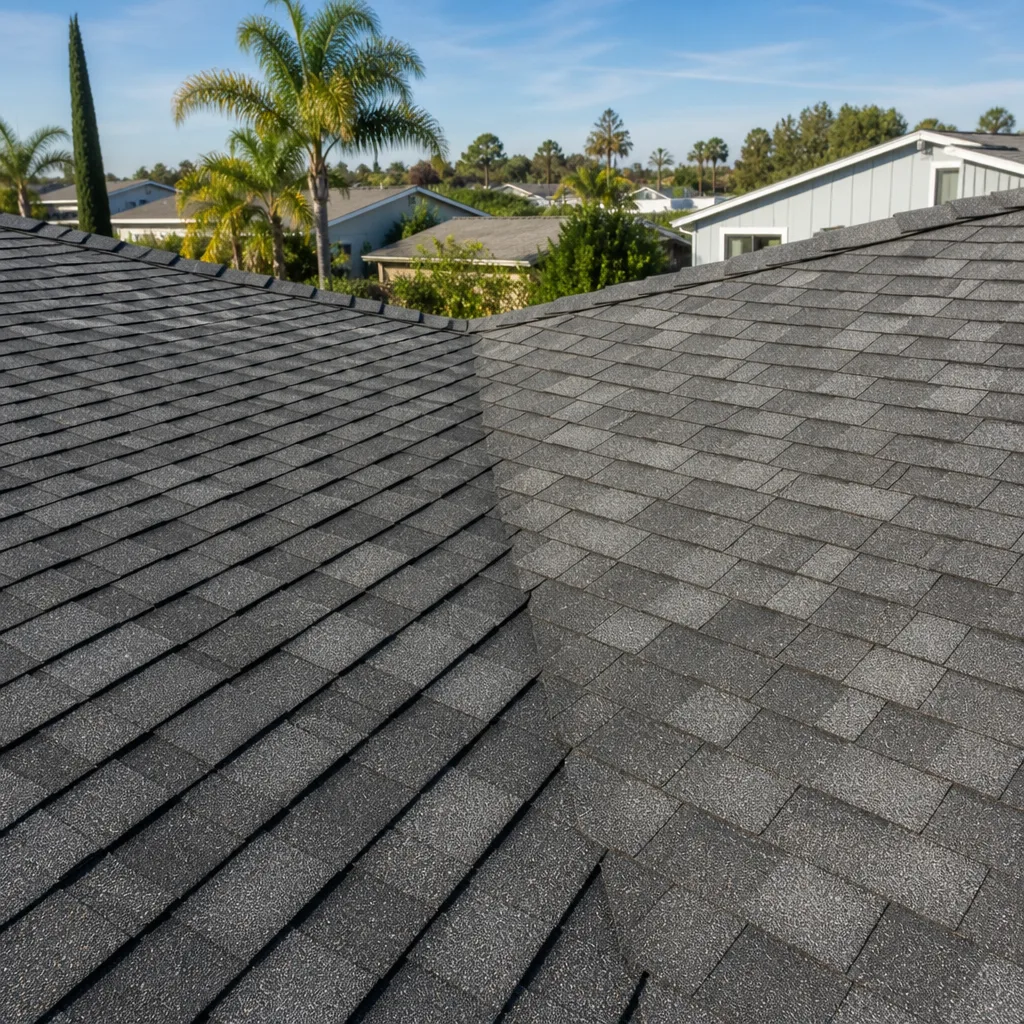
Free roof inspection with deck photos before we talk money - GAF and Owens Corning certified installation
Roofing Warning Signs: A Roseville Homeowner’s Reference Guide
The warning sign most Roseville homeowners miss isn’t a leak. It’s the grit collecting at the bottom of a downspout after a dry summer. Granule loss in asphalt shingles gets the least attention of any roofing problem and produces the most expensive surprises, because by the time bare patches are visible on the roof surface, UV exposure has already compromised the shingle mat underneath. This guide is built to help you catch that process early. We’ll walk through the climate-specific signals that show up on Roseville roofs, the interior clues homeowners routinely blame on the HVAC or the plumbing, and how to tell material aging apart from a workmanship failure while the difference still matters.
Quick Answer
The main roofing warning signs in Roseville are granule loss in shingles, lifted or cupped shingles on southwest-facing slopes, ridge board warping, blistering on low-slope sections, tile mortar bond failure, attic humidity spikes, and staining that appears in summer rather than after rain. Catching these in the early stage usually means a targeted repair. Missing them usually means a full roof replacement. Age alone doesn’t tell you which roof you have: the orientation of a slope and how it handles local heat often matters more than the calendar.
Styles & brands we work with
- Architectural shingles
- Metal roofing
- Tile roofing
- GAF
- Owens Corning
- Flat & low-slope
Table of Contents
- Granule Loss: The Quietest Warning Sign on a Roseville Roof
- Heat-Specific Warning Signs Roseville Roofs Show
- Interior Warning Signs Homeowners Misread
- What Southwest-Facing Shingles Are Telling You
- Tile and Metal: Warning Signs Specific to Each System
- Workmanship Failure vs. Material Aging
- How to Inspect Your Own Roof Safely
- When Warning Signs Mean Replacement Instead of Repair
Granule Loss: The Quietest Warning Sign on a Roseville Roof
Granules are the mineral layer pressed into asphalt shingles, and they do the actual work of shielding the asphalt beneath from the sun. When they shed faster than the asphalt ages, the mat underneath is exposed to UV radiation and starts to dry out, crack and lose flexibility. On a Roseville roof, that process is slower than in the desert and faster than on the coast, which is exactly why homeowners here tend to underestimate it.
New shingles shed granules. That’s normal, and it’s the source of enormous confusion. A roof installed within the last several months will leave a noticeable amount of dark grit in the downspout sediment after the first several rains. It’s the factory-applied surface releasing the loose material from manufacturing and installation. It settles down.
The diagnostic version looks different. Here’s how to tell them apart:
- Timing: Heavy shedding on a roof that’s several years old isn’t the break-in period. It’s a sign the granule layer is degrading faster than it should.
- Distribution: Granules in one downspout are expected. Granules in every downspout, especially after a dry stretch followed by a rainstorm, point to a whole-roof condition.
- Texture: Granules should feel sandy in the palm. If you find larger, asphalt-coated flakes, that’s a coated granule, and the shingle is actively losing its protection.
- Bare spots: When you can see the mat or the underlying asphalt through the granular surface, the shingle has passed the point where the loss is cosmetic. UV damage is already underway.
The mistake is waiting for a leak. By the time water gets through, the granule stage has been running for years. If your roof has visible bare patches, it’s worth getting it looked at before the next rainy season. Call (279) 529-0857 to schedule a free inspection and estimate.
Heat-Specific Warning Signs Roseville Roofs Show
Summers in Roseville are long and hot, and the signs that follow from that don’t show up in general roofing guides written for colder climates. Four stand out.
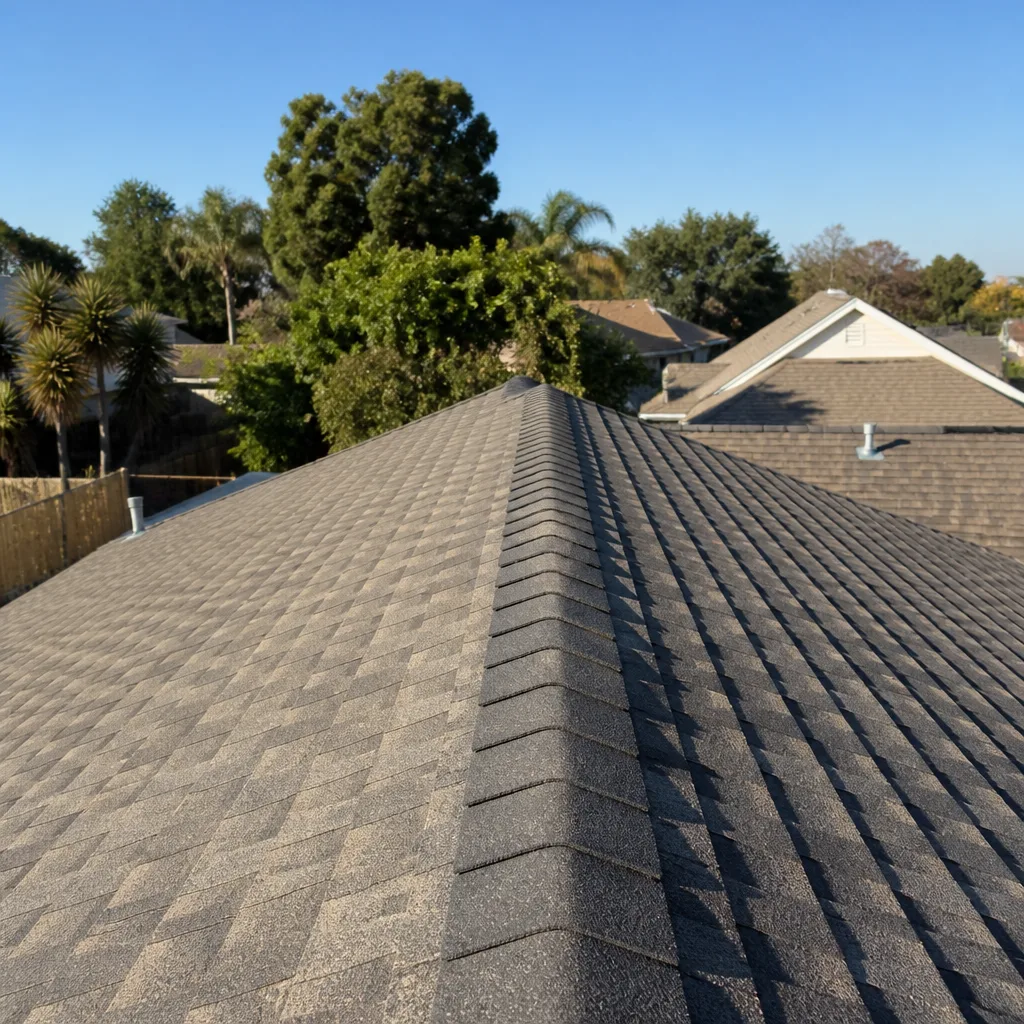
Ridge board warping. The ridge is the highest, most exposed line on the roof, and it takes the most direct sun. When the ridge board or the board beneath the ridge cap starts to warp, the cap shingles above it lift and separate at the joint. Look along the ridge from the street. A clean, straight line is what you want. A wavy or uneven line usually means heat and moisture movement have had their way with the framing.
Bubbling and blistering on low-slope sections. Low-slope areas, including porches, additions and garages, trap heat and don’t shed it the way a steep shingle field does. Trapped moisture under the surface, combined with sustained heat, produces raised blisters. Those blisters break, exposing the substrate, and water finds its way in. This is one of the most common culprits behind mystery leaks in Roseville.
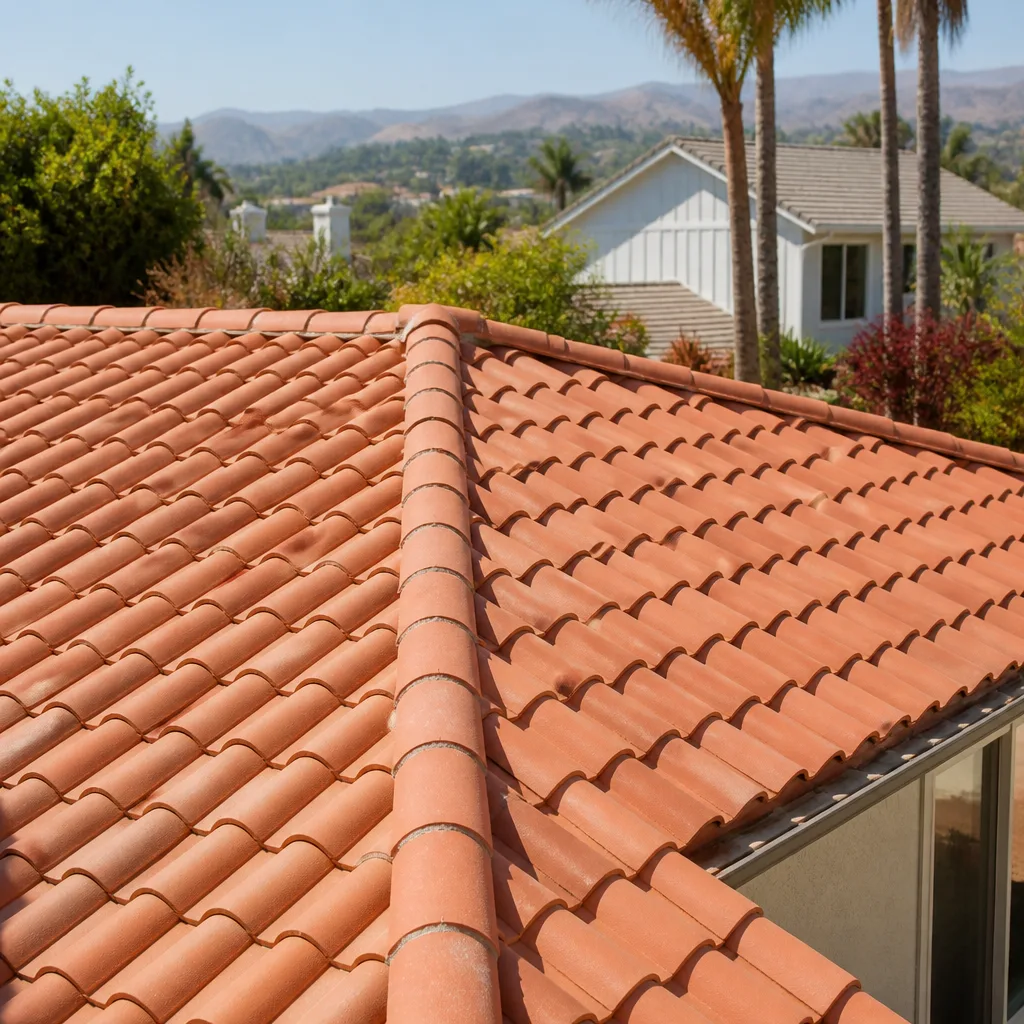
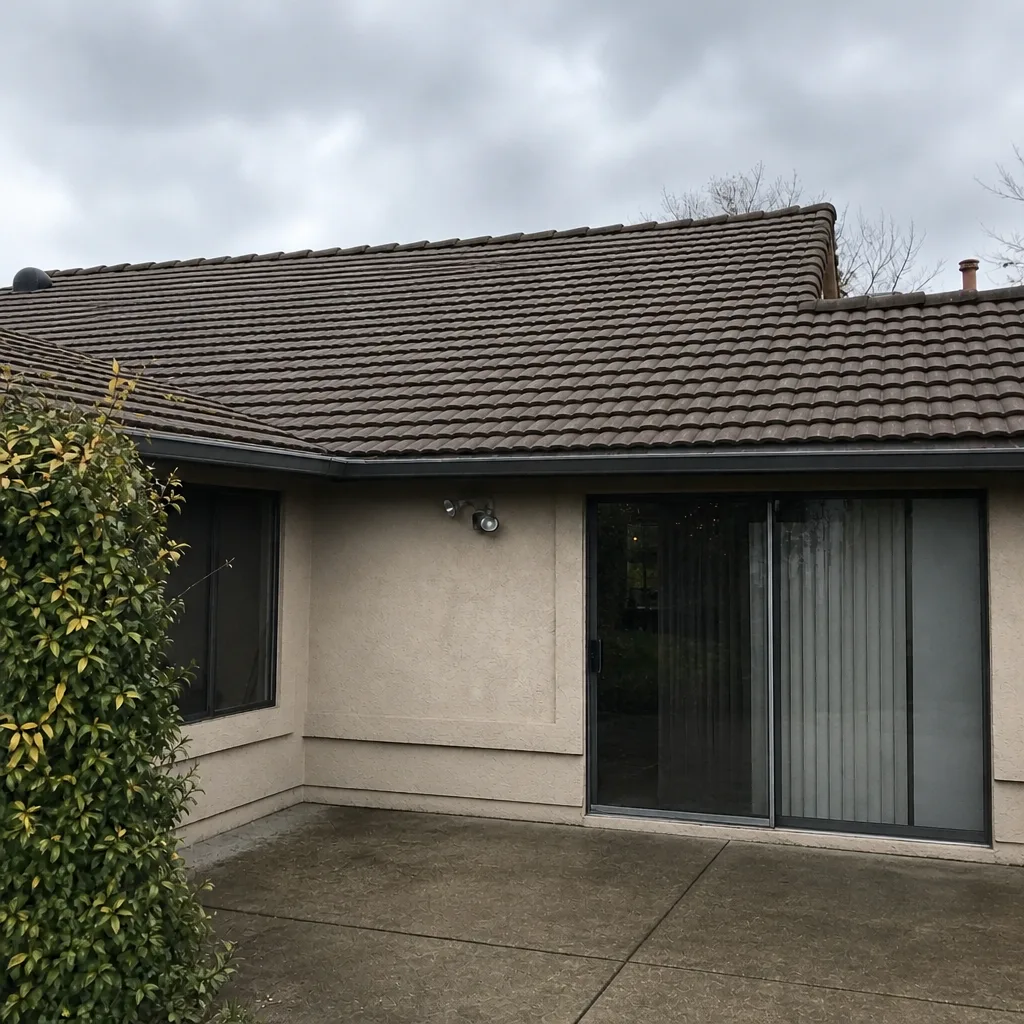
Tile mortar bond failure. Tile roofs are durable, but the mortar holding hip and ridge tiles in place can lose its bond under repeated heat cycles. Loose ridge tiles and tiles that have shifted out of alignment are typically an adhesive or mortar failure. That’s not a cosmetic issue, since a shifted tile leaves the underlayment below it exposed to direct sun and water.
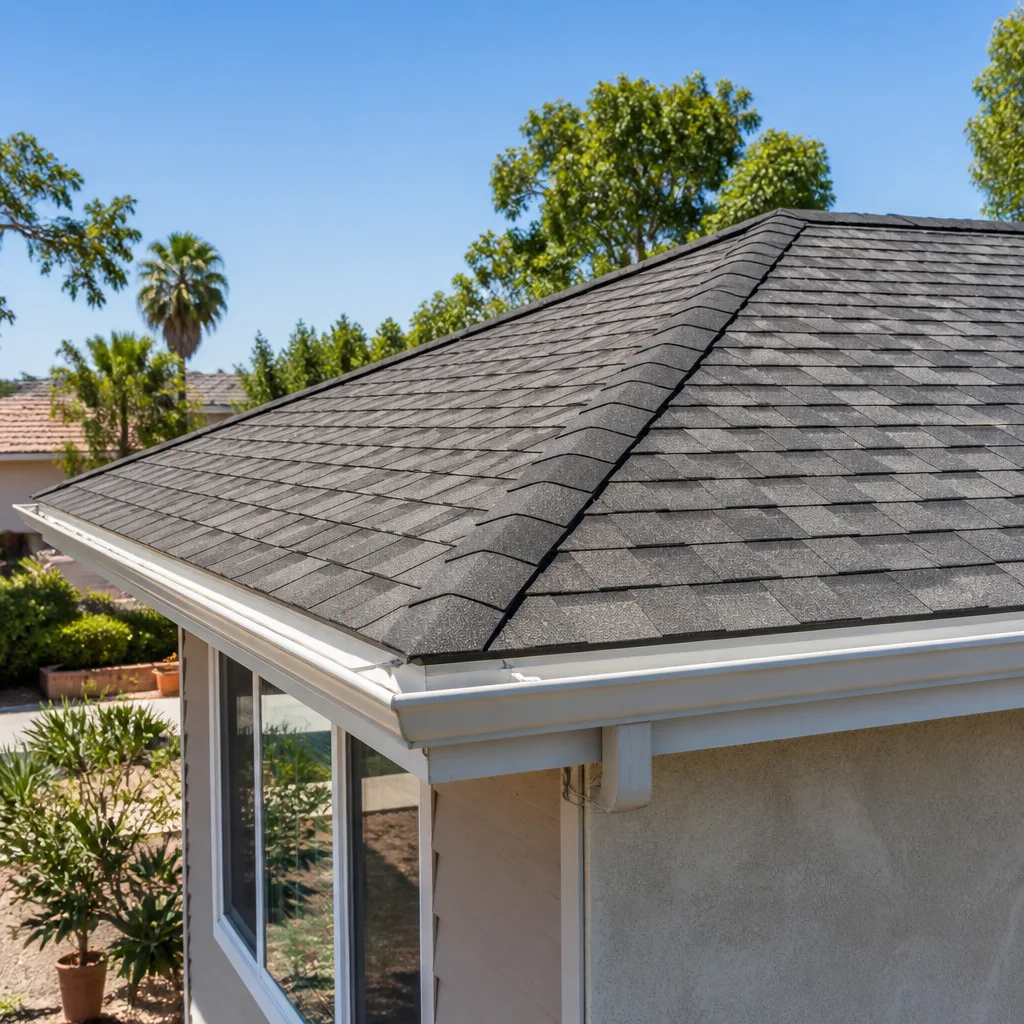
Warped or lifted shingles on the hottest slopes. Even well-installed architectural shingles can lift at the edges in the hottest few feet of a south or west-facing slope. Products like Owens Corning and IKO make variations designed for heat performance, but no shingle outperforms an installation that allows the right ventilation. That’s a conversation worth having before you replace the roof, not after.
Interior Warning Signs Homeowners Misread
The inside of a Roseville home gives you the earliest warning signs, but they’re usually blamed on the HVAC or the plumbing. Here’s where to look instead.
Attic humidity spikes. A well-vented attic stays close to the outdoor humidity. When the attic feels noticeably more humid than the outside air, or when the wood framing feels soft or cool, moisture is being trapped. That’s a ventilation issue, a leak, or both. If it’s happening in multiple seasons, it’s not a seasonal quirk. It’s the roof system telling you it can’t breathe.
Staining that appears in summer rather than after rain. This is the sign homeowners consistently misattribute. Water stains that show up weeks after the last rain are rarely coming from a fresh leak. When the attic heats up, trapped moisture condenses on the underside of the sheathing and travels, showing up as stains on the ceiling or on the framing. If the timeline doesn’t match a storm, look at ventilation and insulation before you look at the plumbing.
Insulation compression near the eaves. Insulation that’s been pushed down and compressed to a fraction of its original thickness near the eaves has usually been soaked and dried, or it’s been crushed against the roof deck. Either way, it stops doing its job. In a Roseville attic, that concentrates heat and moisture around the roof edge and accelerates wear exactly where you can’t see it.
If any of these are familiar, don’t wait for a ceiling stain. A free estimate is the cheapest way to find out whether you’re looking at a small fix or a
roof replacement, and it takes one call to (279) 529-0857 to get on the schedule.
What Southwest-Facing Shingles Are Telling You
The slopes facing south and west catch the most direct afternoon sun in Roseville, and they’re where the roof will show its age first, regardless of the shingle brand. That’s not a defect. It’s orientation. But it means the same roof can look nearly new on the north side and worn on the southwest side.
That single fact should reshape how you read your own roof. Look at it slope by slope.
- Cupping: The shingle edges curl up, creating a cup shape. This usually means the shingle is losing its oils and its flexibility and can’t flatten back under heat.
- Lifting: The shingle edges rise up off the ones below, sometimes in the pattern of the adhesive strip above, often visible as the tab pattern released. On a southwest-facing slope, that’s a sign the adhesive bond is failing under sustained heat.
- Curling: The whole shingle lifts away from the deck along one edge. More serious than cupping, and typically means the shingle and the deck below are reacting to opposite forces.
- Missing tabs: Individual tab sections missing on a southwest slope usually point to wind lift that started where the adhesive seal was already compromised.
If the southwest slope has cupped or lifted shingles and the north slope looks fine, you don’t necessarily need a whole new roof. You may need a targeted repair or a slope-by-slope replacement. That’s one of the reasons we carry shingles from seven manufacturers, including GAF, CertainTeed, Owens Corning, IKO, Atlas, Tamko and Boral. The recommendation should match the slope, the sun exposure and the home’s budget, not a single-brand supply deal.
Tile and Metal: Warning Signs Specific to Each System
Shingle roofs get most of the attention, but tile and metal systems have their own early warning signs. We install all three systems, and the signals differ.
Tile roofs
The visible surface of a tile roof will outlast nearly everything under it. The trouble is usually the underlayment, which is what actually keeps water out, and the mortar at hips and ridges. Watch for:
- Tiles that have shifted, cracked or slid out of alignment
- Mortar that has cracked or separated at the hip and ridge lines
- Visible underlayment exposed where tiles have moved
- Chalky or crumbling mortar, which signals heat and moisture cycling through the joint
Because the tile hides the underlayment, tile roof leaks are often discovered late. If your tile roof is visibly showing any of these, get it inspected before the next rainy season.
Metal roofs
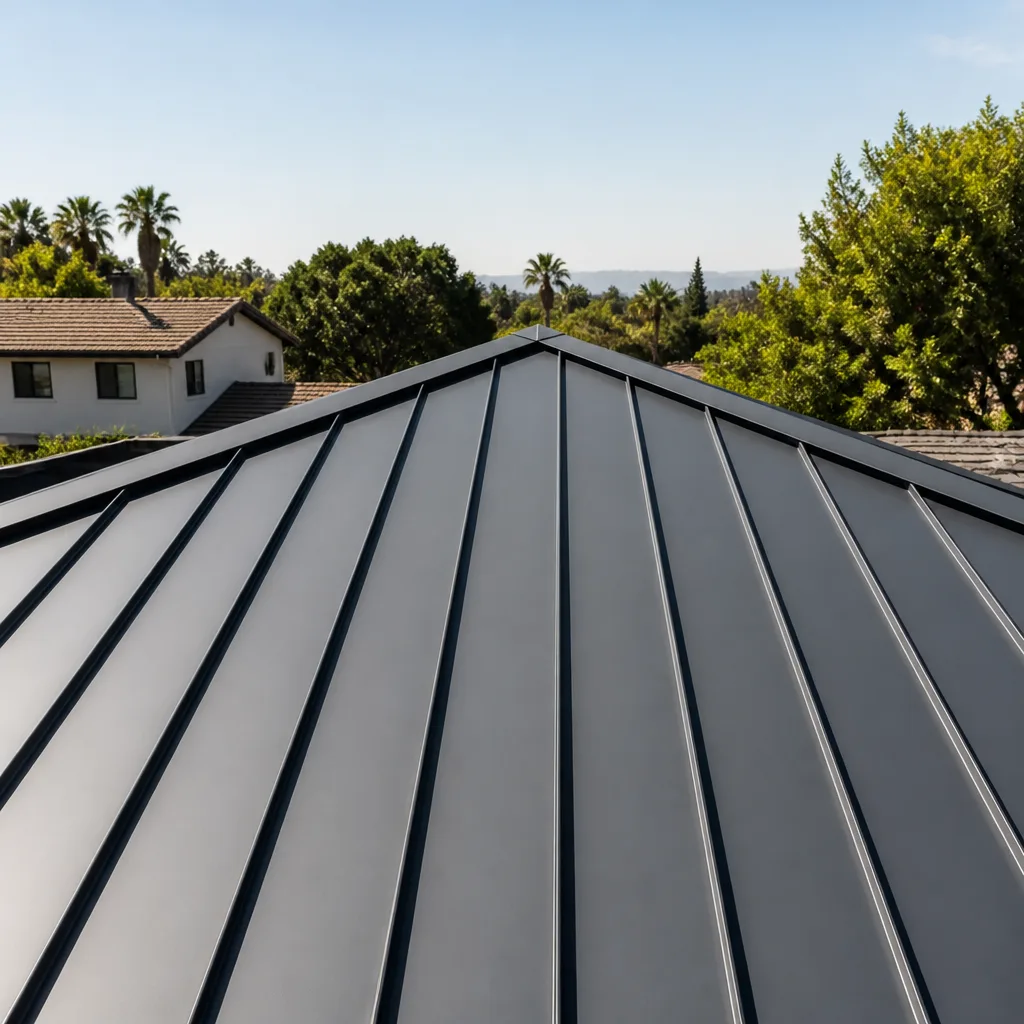
Metal systems hold up well in the local heat, but fasteners and seams are where failure shows up first. Look for:
- Backed-out or rusted fasteners at panel seams and the ridge
- Sealant at joints that has cracked, shrunk or pulled away
- Oil canning, which is the visual denting or rippling between seams, more noticeable on lighter-gauge panels and on south-facing sections
- Loose panels at the eaves, where wind lift is strongest
Both systems have their own maintenance rhythms. A metal roof on a Roseville home, installed correctly, tends to hold up well in this climate, but it’s not maintenance-free. A tile roof does too, and both should be checked after any local storm with high wind. Get that check scheduled by calling (279) 529-0857.
Workmanship Failure vs. Material Aging
Not every warning sign is the roof getting old. Some of them appear on roofs that are relatively new, and the distinction matters because it determines who’s responsible. This section is one of the most useful in this guide and one of the least discussed.
Material aging follows a pattern. It starts on the most sun-exposed slopes and works its way across. It shows up first in the granular surface and shingle flexibility, then in the shingles’ ability to lie flat. You can see the progression.
Workmanship failure doesn’t follow that pattern. It clusters. It shows up in the same place, at the same time, regardless of which direction the slope faces:
- Nail placement and shingle sealing: Shingles installed with fasteners driven too high, too low or through the wrong area tend to lift well before they should, and in patterns that don’t match the sun exposure.
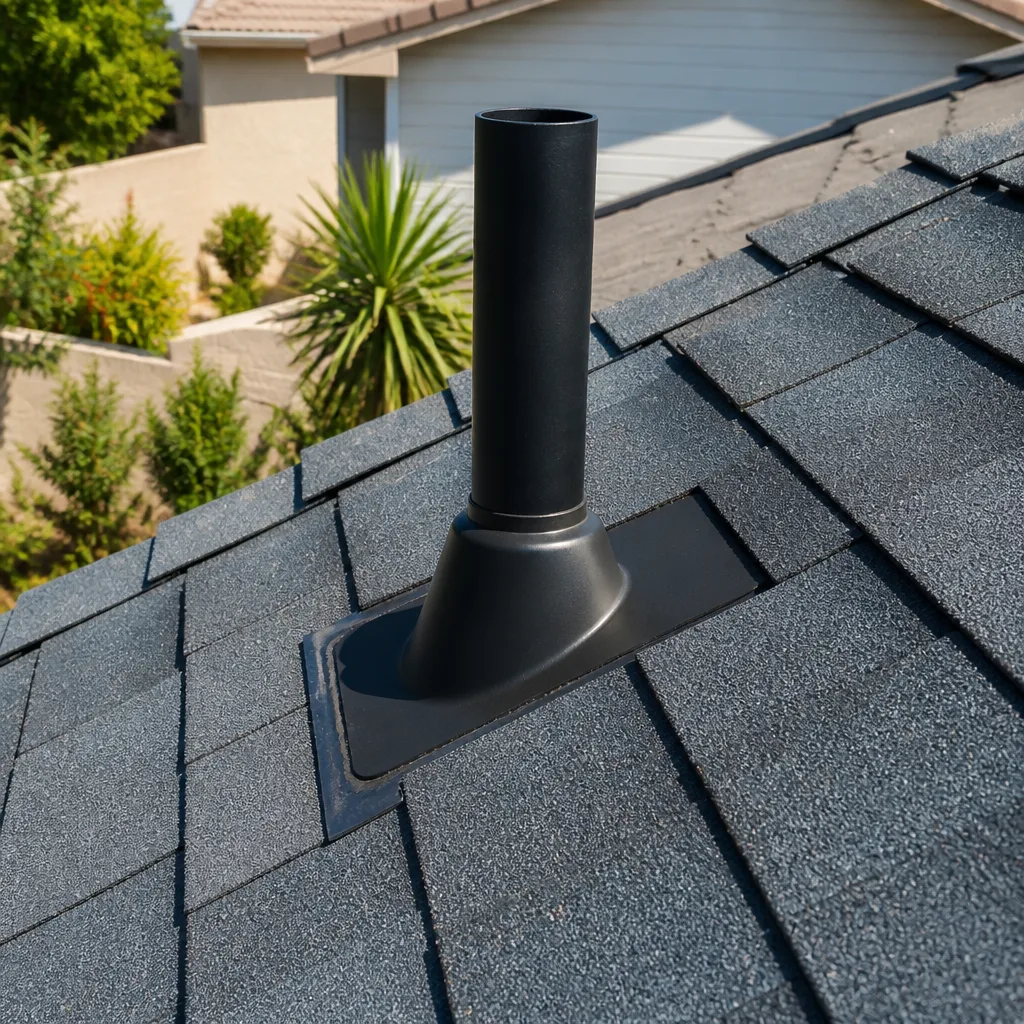
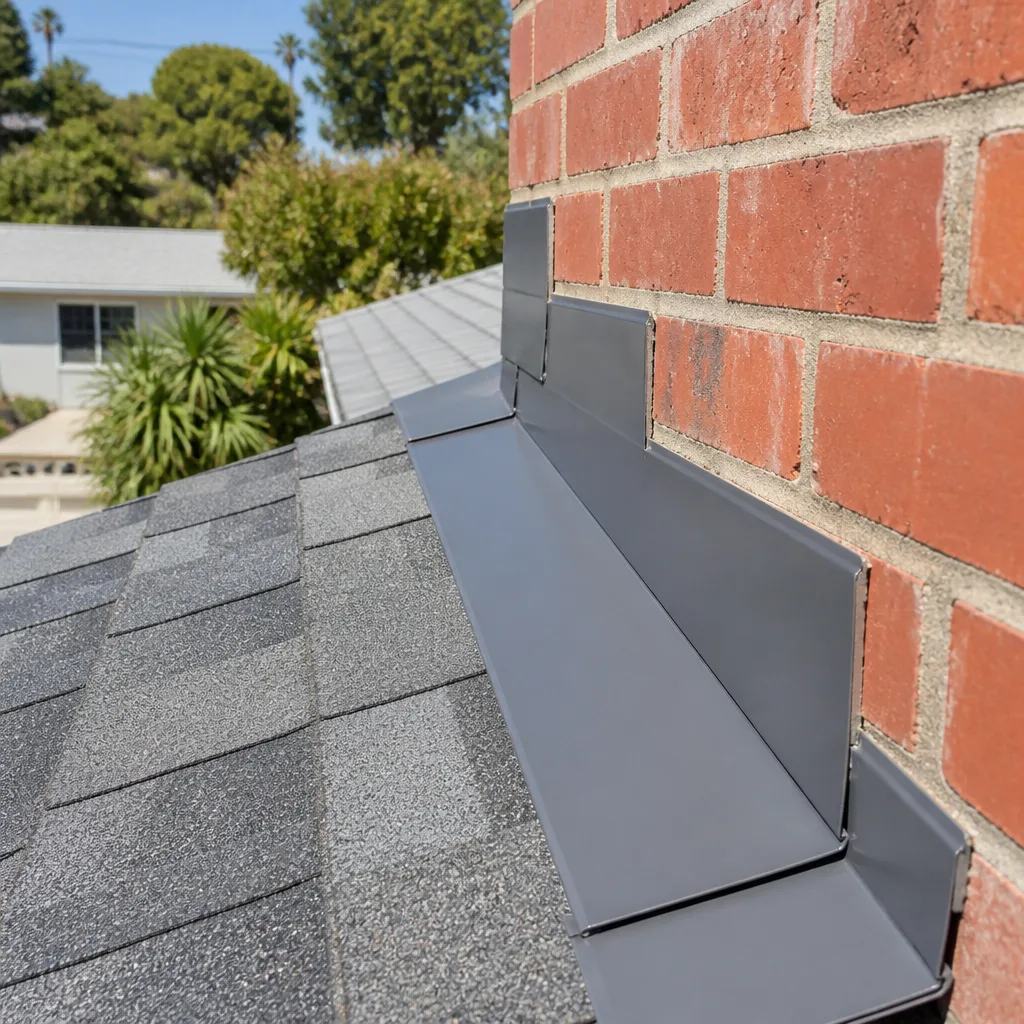
- Improper flashing: Flashing around chimneys, vents and skylights is where a large share of premature leaks start, and they’re almost always an installation detail rather than a material failure.
- Skipped or improper underlayment: If the underlayment wasn’t installed correctly, the visible shingle can look fine while water finds its way through underneath, in a way that’s hard to detect and easy to misread.
- Poor ventilation: If the attic ventilation was undersized or improperly placed at installation, the roof will overheat and the shingle life will shorten, sometimes by a lot. That’s not a manufacturer defect. It’s an installation decision.
- Fastener stress on metal systems: Backed-out fasteners at panel seams on a young metal roof are usually a stress and installation issue, not material fatigue.
How do you know whether it’s the installer or the manufacturer? Start with the warranty paperwork. Manufacturer warranties cover product defects. They do not cover workmanship failures, and many require proof of proper installation to honor a claim at all. If you’re working with us, we supply products from manufacturers like Owens Corning, CertainTeed and GAF that carry transferable manufacturer warranties on many of their lines, and we can walk you through what those warranties cover before a project starts, not after a problem shows up. That’s one of the reasons we recommend deciding this before installation, not in the middle of a dispute.
If your roof is young and showing problems, an independent inspection is the first step. Call (279) 529-0857 for a free estimate and a written assessment.
How to Inspect Your Own Roof Safely
You can catch a great deal of these warning signs from the ground, and you should. Roofs are steep, and falls are serious. Here’s a safe routine you can run a couple of times a year, ideally in early fall before the rainy season and again in the spring.
- Start at the street. Walk out to the street, not just the yard, so you’re seeing the whole roof at a distance. Look along the ridge and the horizontal lines of the shingle rows. Anything that looks wavy, uneven or lifted is worth photographing.
- Look at the downspouts after a rain. Check the sediment collected at the bottom and where each downspout empties. Granules in every downspout are worth a closer look.
- Check the attic from the hatch. With a flashlight, look at the underside of the roof deck for staining, and feel the framing for softness. Look at the insulation near the eaves for compression.
- Photograph anything you see. A zoom lens or a phone from the ground is enough. Photos help you compare the same slope a year later.
- Check the edges from the eaves, not the roof. From a stable ladder, look at the fascia and the drip edge for peeling, rot or discoloration, and the underside of the soffit for water staining.
- Log what you find. Notes on a phone are enough. Small changes are far easier to read when you’ve got a baseline.
Do not walk the roof yourself. If you see anything that gives you pause on the list above, stop there and call a professional. If you already suspect something specific, our techs can take a look. Our technicians have up to 10 years of experience on shingle, tile and metal systems, which means the same assessment covers all three.
When Warning Signs Mean Replacement Instead of Repair
A single warning sign rarely means replacement. Patterns do. Here’s a practical, approximate way to think about it based on what we’ve seen on roofs around Roseville.
- One isolated problem, one small repair: A single cracked or missing shingle, one flashing detail, a small leak traced to a specific spot. Target the repair and see whether the surrounding shingles hold up.
- Multiple slopes showing the same warning signs: Granule loss across the whole roof, or cupped shingles on both the south and west slopes. The roof has reached the phase where it will need steady attention. That’s usually the point where a
- [roof replacement becomes the better financial decision than repeat repairs.]
- The problem is underneath: A tile roof with underlayment that’s no longer keeping water out, or a shingle roof where the decking itself is showing moisture damage. These are full-scope jobs, not spot patches.
- The workmanship pattern is systemic: If the whole roof shows installation problems, repeated repairs patch symptoms permanently. That’s when the right move is to rebuild it correctly.
If you’re thinking about replacement, we handle the full scope, from removal of the existing materials through the final inspection, and we also do
new roof installation on new construction, which means we see roofs at both ends of their lives and know what a good one looks like early. If yours is showing early warning signs, call (279) 529-0857 for a free estimate and a written, line-item quote before you commit to anything.
Common Mistakes to Avoid
- Waiting for a leak. A leak is a failed roof, not a warning sign. By the time water is getting inside, the shingle or the underlayment has been degrading for years.
- Mistaking break-in granule loss for failure. A new roof sheds grit after the first rains. It’s the same grit that makes an old roof’s downspout look alarmingly full. Learn the timing distinction and save yourself a lot of worry.
- Blaming the HVAC for a summer ceiling stain. Stains that appear in the middle of summer, not after rain, are usually an attic moisture problem. Look at ventilation before you call the duct cleaning.
- Calling a single missing shingle a replacement. One missing tab on one slope is a repair. It’s when the pattern crosses multiple slopes and matches the sun exposure that you’re looking at a replacement decision.
- Assuming the manufacturer is responsible for a young roof’s problems. The product warranty covers product defects. Workmanship, ventilation and flashing failures are installation decisions, and many warranties require proof of correct installation before they’ll consider a claim.
- Patching a tile underlayment problem with a spot repair. On a tile roof, the tile is the visible layer. The underlayment is what keeps the water out. If the underlayment is failing, patching individual tiles doesn’t solve the actual problem.
- Judging the whole roof by the slope you can see from the driveway. The south and southwest slopes wear first. A roof that looks healthy from the street may be doing worse than you think on the sun-facing side.
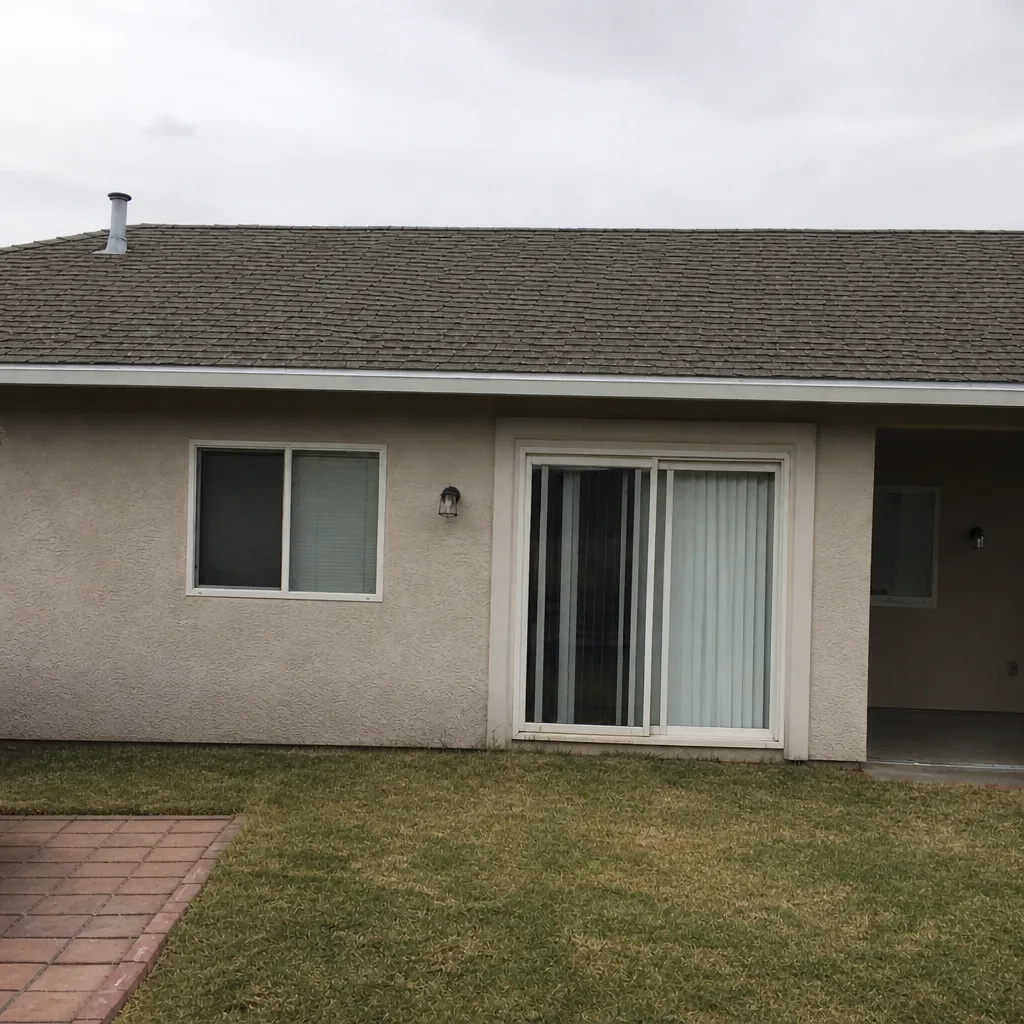
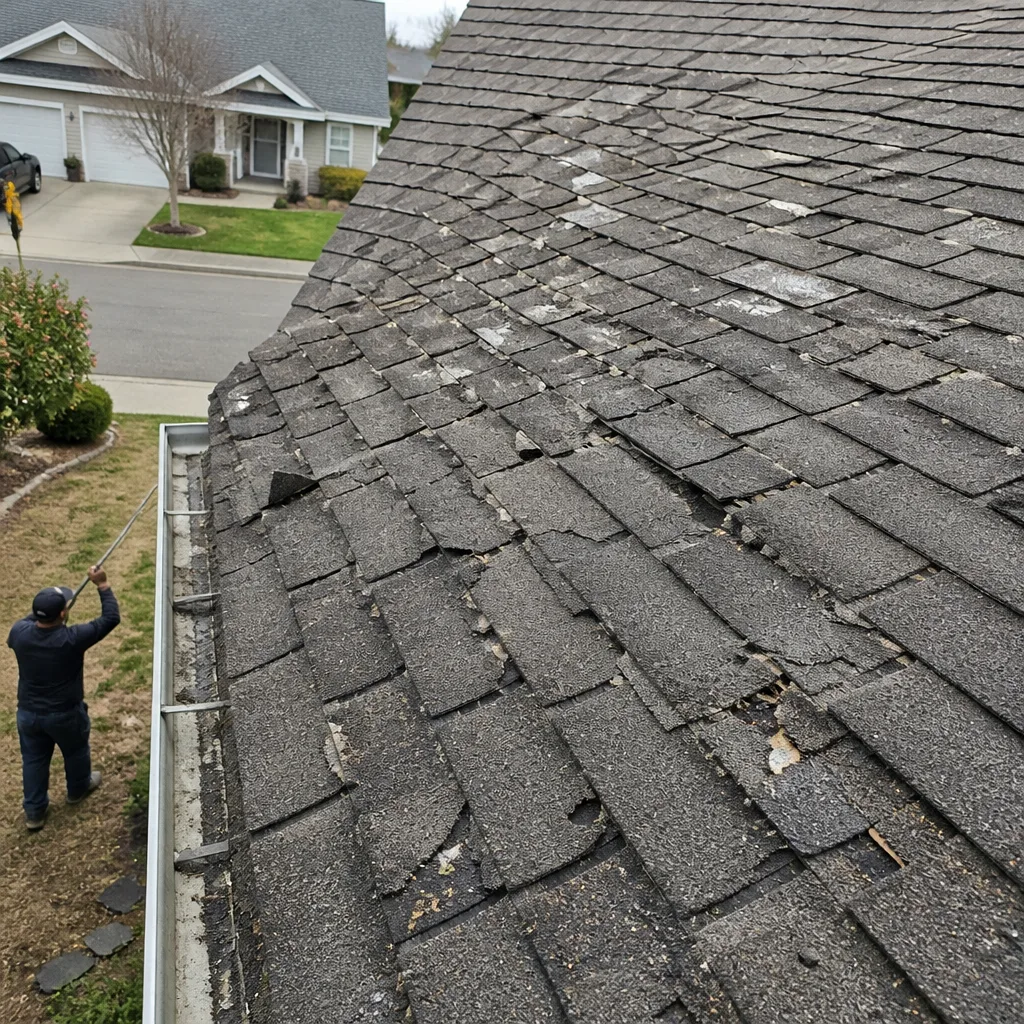
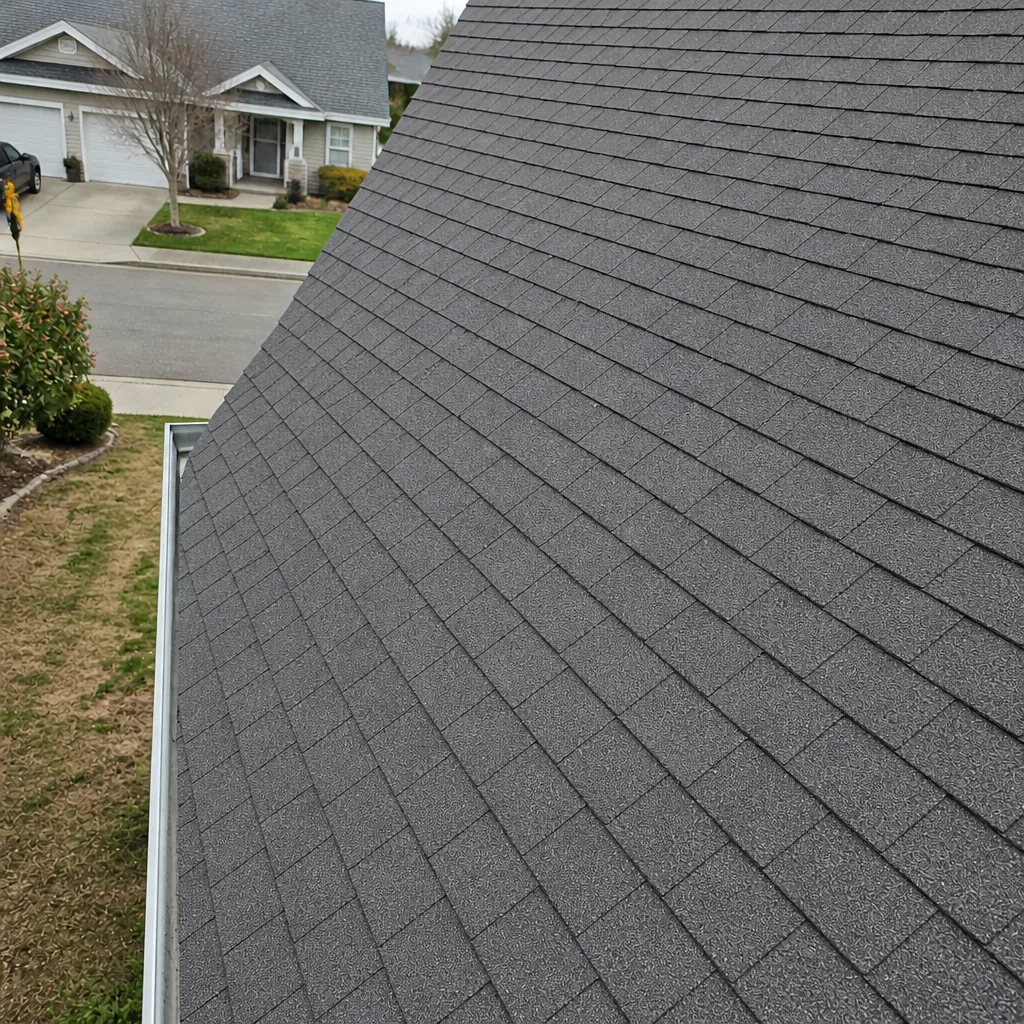
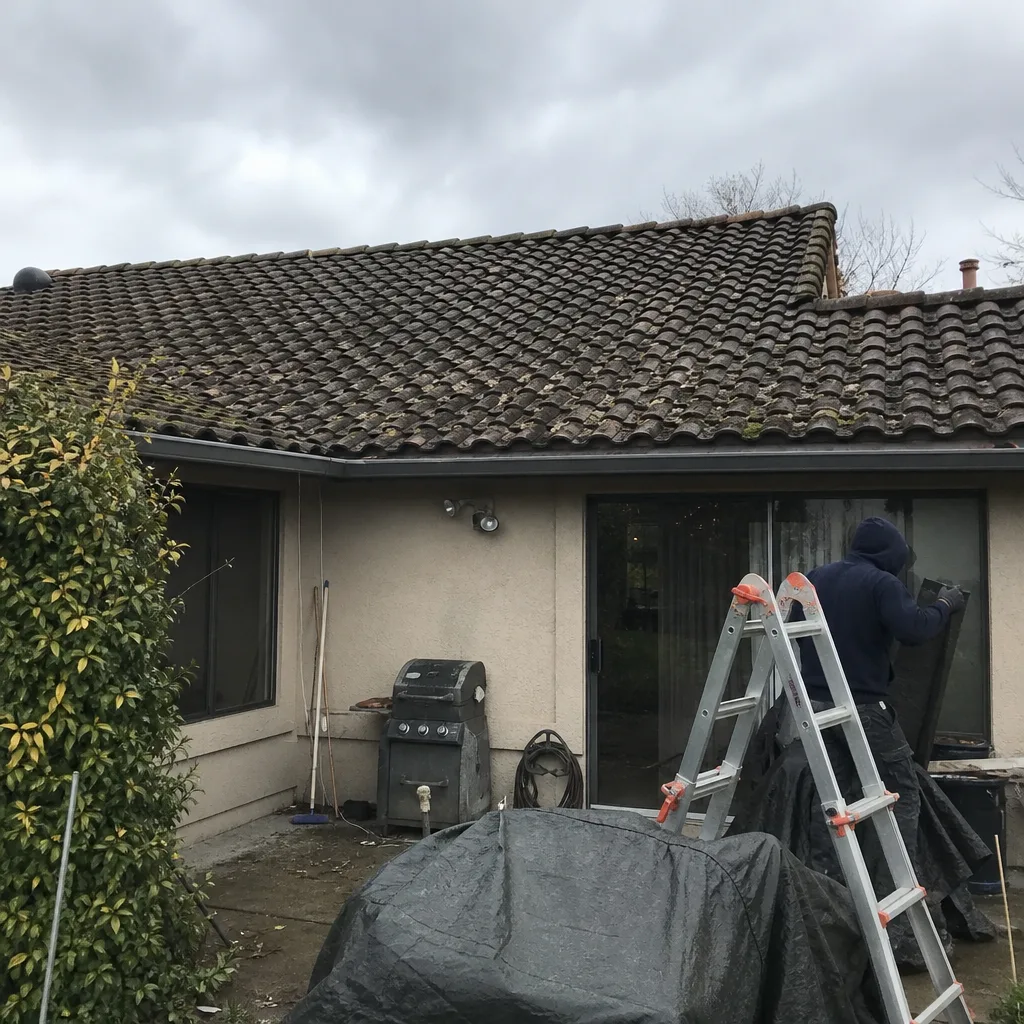
See the difference
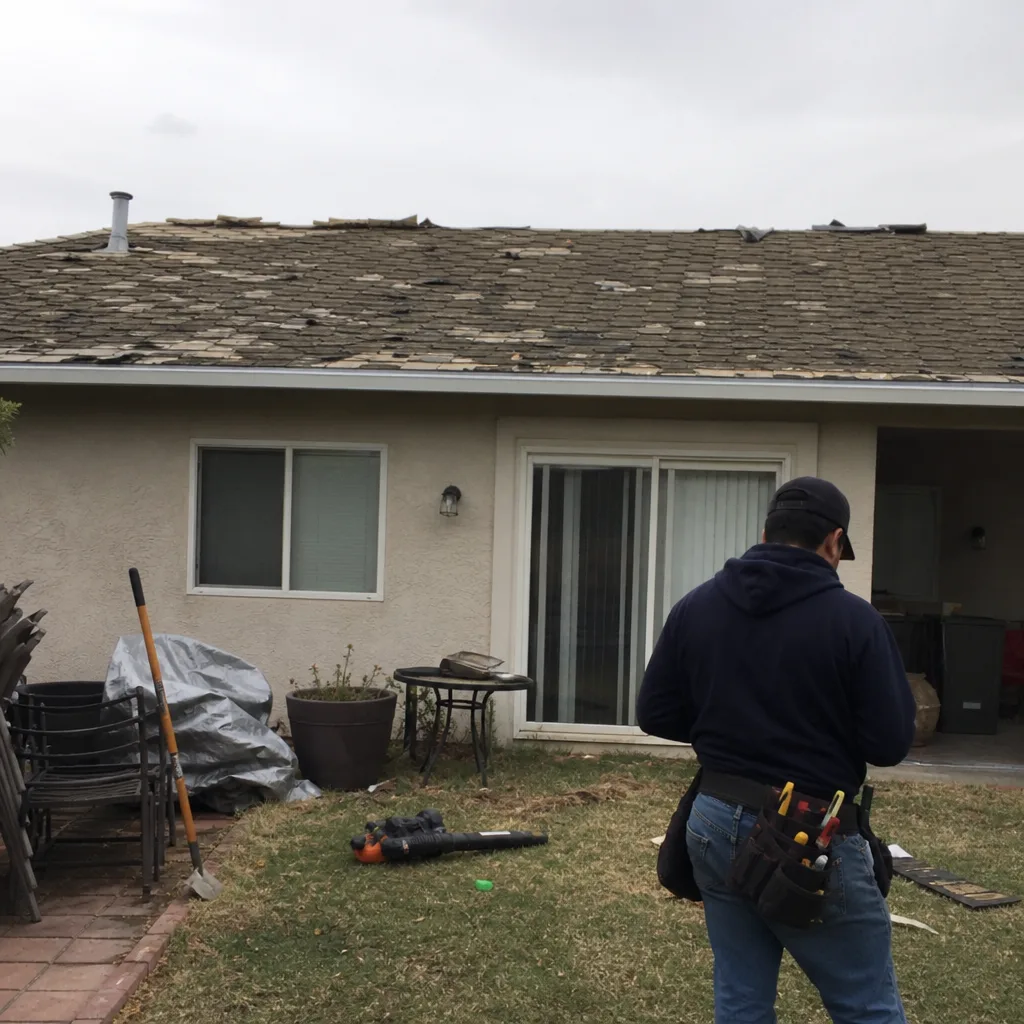 Before
 After
 Before
 After
 Before
 After
When to Call a Professional
Call a professional if you see shingles missing across more than a small area, repeated staining in the attic, a wavy ridge line, loose ridge tiles or metal panels, or granules in every downspout after a rain. You should also call if the timeline doesn’t match the weather: a summer stain, a leak with no clear source, or a young roof that’s already showing wear. Those are the cases where a free inspection saves you real money by giving you an accurate read before the rainy season. Roofing Roseville Pros offers free estimates in Roseville. Call (279) 529-0857 to schedule your free estimate. Our technicians have up to 10 years of experience, and we handle shingle, tile and metal systems under one roof, so the same estimate covers the assessment for all three.
Frequently Asked Questions
Roof replacement in Roseville typically runs from roughly $12,000 to $15,000 for an average-sized home, and can go higher with complex rooflines, accessibility limits or premium materials like tile or metal. The written estimate sets the final price, and it should break the project into line items so you can see what you’re paying for. Call (279) 529-0857 for an exact quote. Estimates are free.
Check the downspout sediment after a rain, especially following a dry stretch, and look for dark grit and coated flakes. On the roof itself, look for patches where the surface no longer looks uniformly grainy and the mat or asphalt is visible underneath. New shingles shed granules for a short break-in period. Heavy shedding on a roof that’s several years old is a diagnostic sign, not a break-in sign. Call (279) 529-0857 for a free inspection.
Because the southwest-facing slopes get the most direct afternoon sun, they age first. Cupping, lifting and curling on the sun-facing slope while the shaded slope looks fine is normal orientation-driven wear, not necessarily a defect. It’s a good reason to check the whole roof slope by slope rather than judging it from the street. Call (279) 529-0857 and we’ll take a look.
It’s usually not a fresh leak. Stains that appear during hot weather are more often attic moisture condensing on the underside of the sheathing and traveling to a spot where it shows. The underlying cause is typically a ventilation or insulation problem, and it can still lead to roof damage. An inspection is the only way to know for sure. Call (279) 529-0857 for a free estimate.
It depends on whether the failure is material or workmanship. Granule loss across the whole roof is usually a product issue. Problems that cluster in one area regardless of sun exposure, like lifted shingles in a pattern, improper flashing or backed-out fasteners, are usually installation issues. Read the manufacturer’s warranty carefully and get an independent assessment. Call (279) 529-0857 for a free estimate and a written opinion.
It shouldn’t. A written, line-item estimate sets the price, and the job should be completed for that figure. If something unexpected comes up after tear-off, like damaged decking, that’s a conversation to have before the work continues, and it should be documented in writing. Call (279) 529-0857 to request a written estimate before any work begins. Estimates are free.
The Bottom Line
Roofing warning signs in Roseville show up long before the leak does. Granule loss in the downspout, cupped or lifted shingles on the southwest slope, a wavy ridge line, blistering on low-slope sections, loose tile mortar, attic humidity, and summer staining are all signals worth acting on. The key is to read the pattern rather than a single symptom, check the roof slope by slope, and understand whether what you’re seeing is material aging or a workmanship failure. A
shingle roofing system that’s installed and vented correctly will last. When you’re ready to talk through it, call (279) 529-0857. We answer 24/7. Fast dispatch from 7am to 7pm, Sunday through Friday.
We work across shingle, tile and metal systems and source products from seven manufacturers, so the recommendation follows your roof, your sun exposure and your budget rather than a single brand. Seven trusted manufacturers, one specialist team. For more about how we work, see Roofing Roseville Pros.
Written by the team at Roofing Roseville Pros.